
Family Shifts, Gender & Sensitive Realities
Mama's Boy or Mama's Wall? Navigating Closeness With Your Teenage Son
He hugs you fiercely one day and treats you like furniture the next — while his father watches from a distance he won't bridge. The real triangle, and how to stop being its referee.
Dignity & Non-Humiliation
The fierce adolescent biological impulse to protect self-respect, autonomy, and mature status.
The Switchboard Mother
Free translation means the two males never build a direct channel — you become resented infrastructure.
"Stop translating, start connecting: one father-son hour a week, zero evaluation, no mother present."
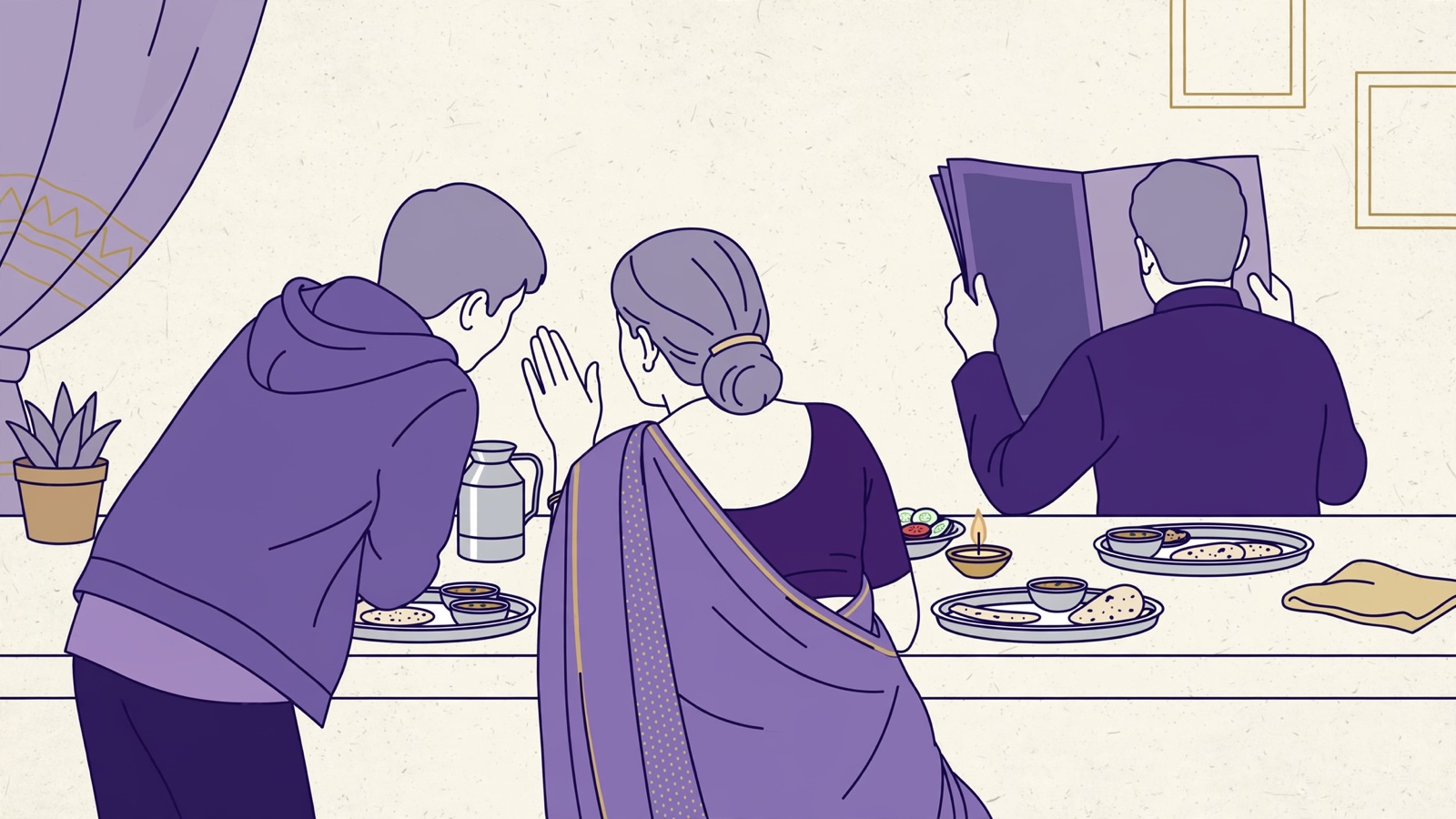
"Sunday lunch. He tells you — only you — about the fight with his best friend, voice low, eyes on his plate."
"His father walks in mid-sentence. The boy's face shutters closed like you've never seen it shut. 'Nothing. Forget it,' he says, suddenly fourteen feet tall and made of stone."
"Later your husband says the sentence that sits in your chest for days: 'He tells you everything and me nothing. You've made him soft.' And you're caught — defending your son feels like betraying your husband; defending your husband feels like abandoning your son."
You're not the problem in this triangle — you're the only bridge in it, and bridges get walked on from both sides. His shutdown around his father isn't your doing; it's the boy code (never show softness to the man testing your hardness) colliding with his genuine need for one safe adult. The way out isn't choosing sides — it's getting the two males talking to each other so you can stop being the switchboard.
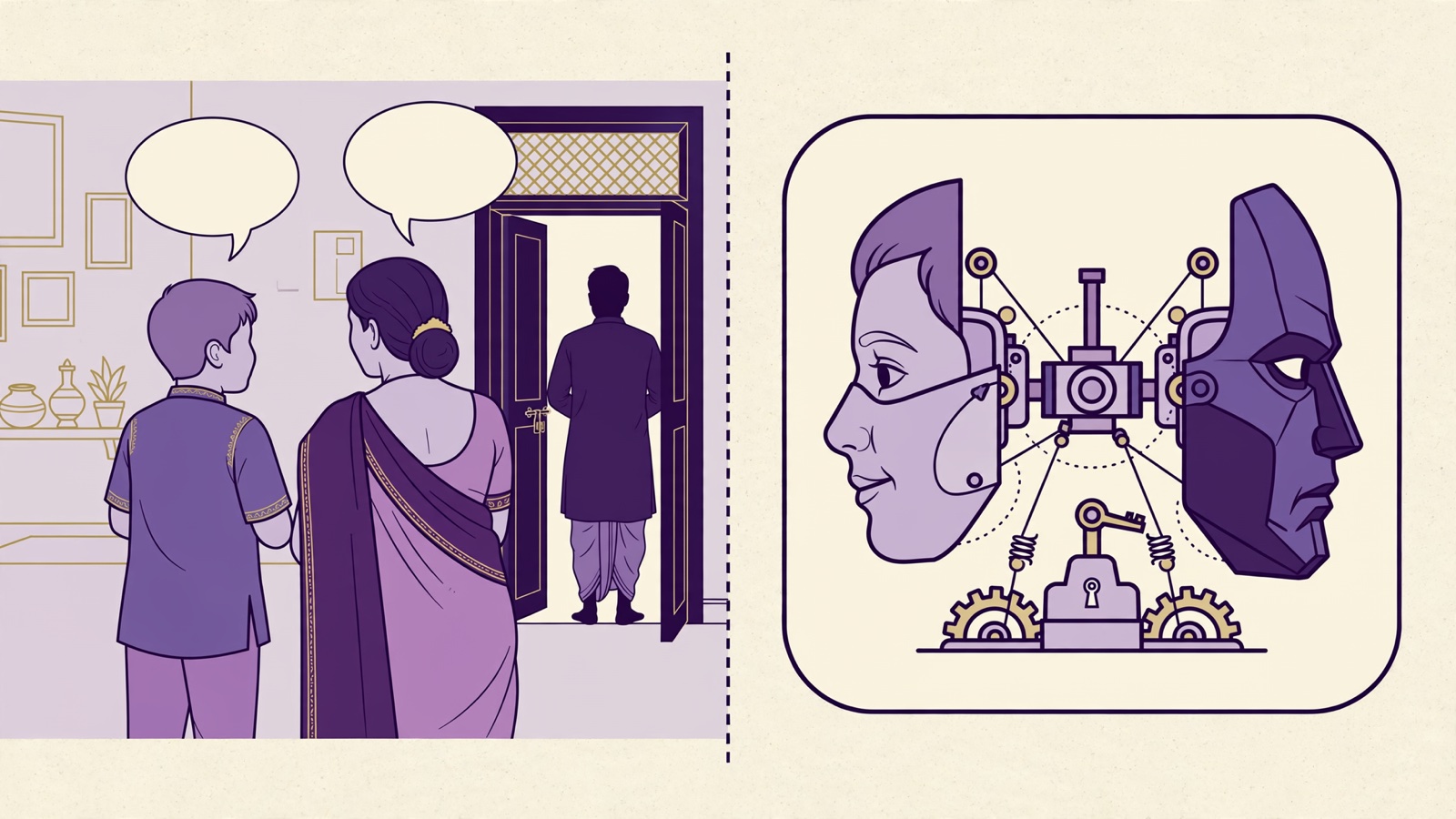
The Behavior Decoder
Translating what you see into what their nervous system is actually experiencing
"Warm, open, chatty with mother — instant stone the moment father enters"
Dad is the hardness test I can never pass and can't stop taking. Showing him my soft parts feels like handing the examiner my weaknesses.
"'Papa doesn't understand anything. You get me.' (Said warmly, wrecking the marriage quietly)"
Splitting the parents feels safer than facing that I disappoint one of them. If Mum is my ally, Dad's distance is Dad's fault, not mine.
"Mocks softness in others — 'look at that crybaby', performs hardness with friends"
Every performance of hardness is a rehearsal for Dad. I'm practising the only language I believe earns male respect.
The Boy Code and the Father Wound That Isn't
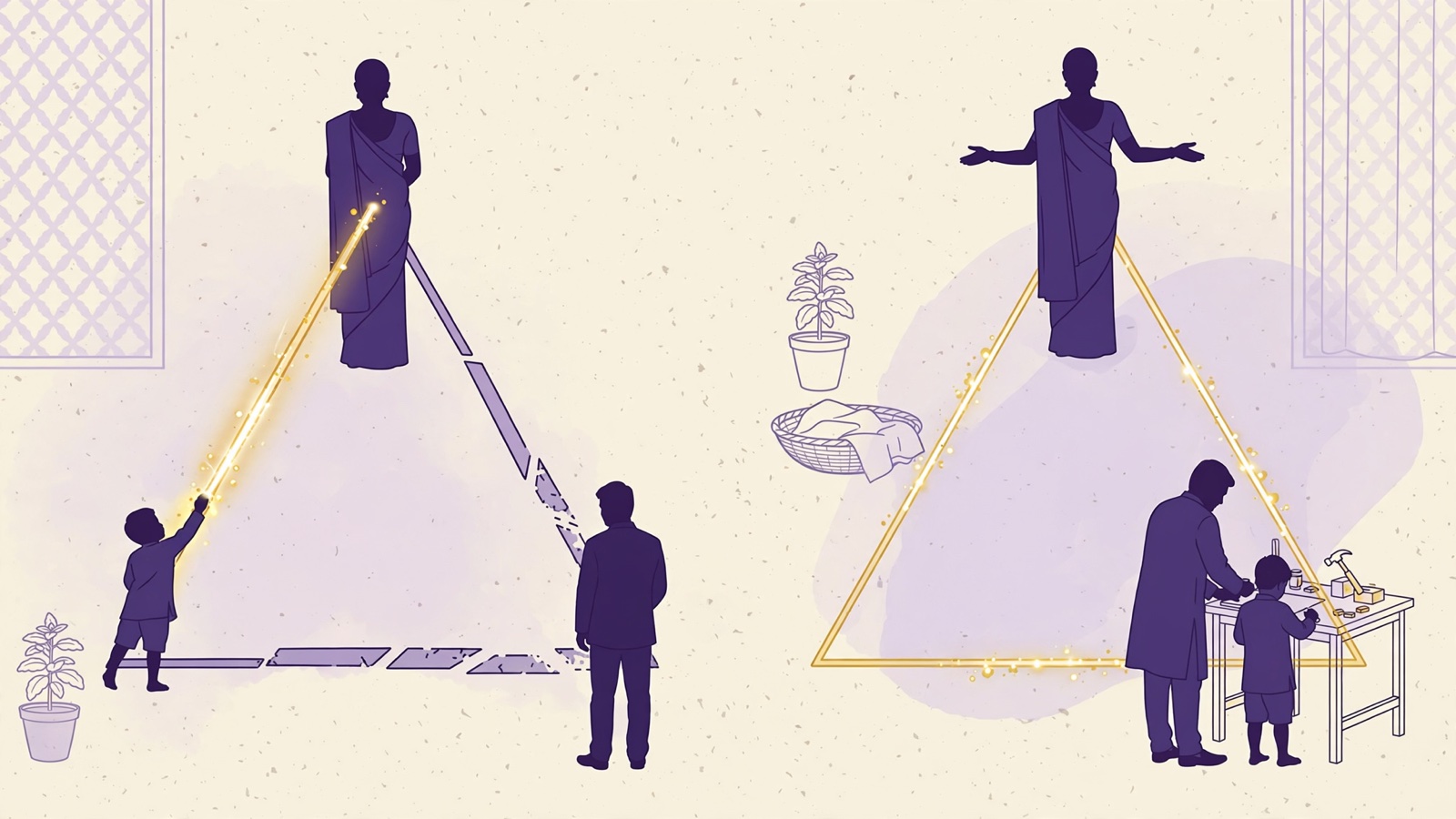
Adolescent boys absorb a brutal social curriculum: vulnerability shown to men gets priced, sometimes cruelly, by peers and fathers alike. So the boy builds two channels — the safe channel (usually mother) where feelings live, and the proving channel (father, male peers) where only hardness is legal tender. Mothers misread the shutdown as 'he needs me more' and double down on the safe channel, which accidentally starves the proving channel of exactly what would fix it: low-stakes, non-testing contact with the father. Meanwhile fathers misread the alliance as favouritism and either withdraw (confirming the distance) or escalate testing (confirming the fear). The triangle is stable, miserable, and completely structural — which means it yields to structure, not to more love from one corner.
Natural Instincts That Accidentally Make It Worse
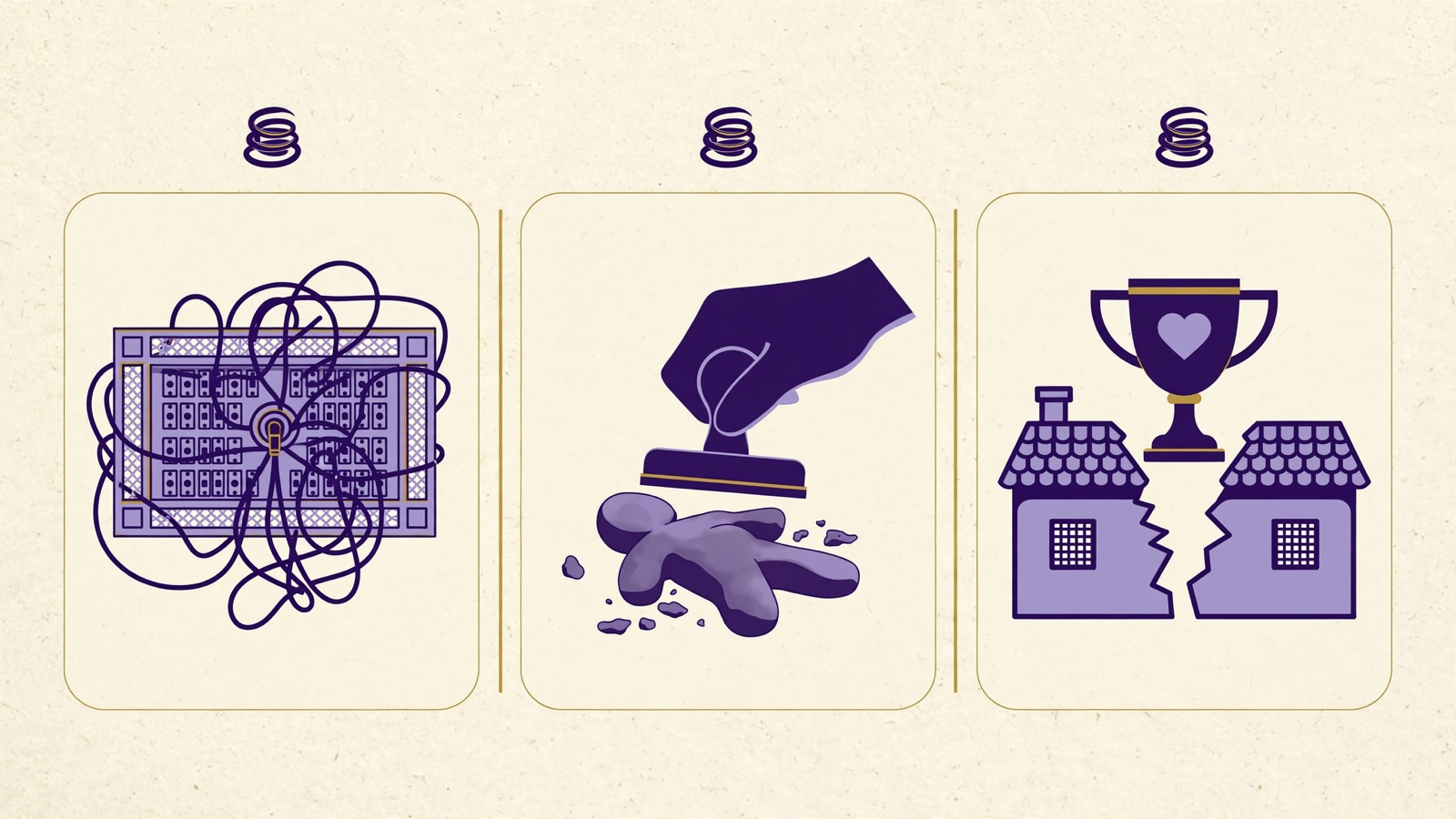
Every caring parent falls into these traps out of love, fear, or exhaustion. Here is what happens inside their nervous system and how to shift:
The Switchboard Mother
Translating between them forever: softening his words for father, softening father's words for him.
The two males never develop a direct channel — why would they, when translation is free? You become infrastructure, exhausted and resented by both.
Resign as translator in stages: 'Tell him directly — I'll be in the kitchen if you need backup.' Backup, not switchboard.
The Softness Prosecution (from Father)
'Stop babying him. A boy his age should... [toughen up / stop crying / handle it].'
Every hardness lecture widens the exact gap it wants to close — the boy performs harder for peers and hides deeper from father.
Trade testing for tasks: father-son projects with real stakes and zero evaluation (fix, build, cook, drive) — respect built shoulder-to-shoulder, not face-to-face.
The Alliance Acceptance (from Mother)
Enjoying being the chosen parent: 'at least he tells ME everything.'
Accepting the alliance makes you complicit in the split — and when adolescence ends, the son who never bonded with his father bills that absence to the mother who enabled it.
Spend your capital reconnecting them, not collecting him. 'That story deserves your father too — want me there when you tell him tonight?'
The Triangle Dissolve Protocol
Three moves that build the missing side of the triangle — father to son, direct.
Install Father-Son Shoulder Time (Weekly, Sacred)
One recurring hour with zero evaluation and zero mother.
- Pick something genuinely side-by-side: driving practice, cooking one dish, a repair, cricket nets, gym. Conversation optional; presence mandatory.
- Two rules for father, agreed in advance: no testing questions, no lectures. Talk about his own week first — vulnerability modelled is vulnerability permitted.
- Mother stays completely out — no check-ins, no debriefs ('how did it go?'). The channel must be theirs alone to feel safe.
Retire as Translator (Graduated Handover)
Shrink the switchboard one message at a time.
- Start with low-stakes relays: 'Tell Papa yourself — it's good news, he'll be pleased.' Escalate gradually to harder ones.
- When father misreads him, coach the father privately, never correct live: 'He shut down because the question felt like a test — try asking about the match first.'
- The goal state: you learn his news third, sometimes. Grieve that lightly — it's success, not loss.
Name the Boy Code Out Loud (With Him)
Give him language for the performance so he can choose it consciously.
- One calm conversation: 'I've noticed you're different people with me and with Papa. That's normal — boys learn early that softness costs them with men. Just know: the performance is optional here at home.'
- Never ask him to drop it with peers — that's his call and his safety. Home is the lab, not the world.
- Praise private softness specifically when you see it: 'That was honest, and it took guts.'
Couples Alignment on the Boy (Private)
The parents must stop litigating him through each other.
- Agree: no 'your son' weaponisation in fights — he's both of yours, always, especially mid-argument.
- Share observations, not verdicts: 'He cried after the match and hid it from you — I think he needs an opening, not a lecture.'
- If father can't soften yet, assign him the structure role (routines, outings, money lessons) while warmth rebuilds — contribution first, tenderness follows.
What to Say Tonight: Word-for-Word Scripts
Save these to your phone or keep them in mind for your next interaction.
"(To him, lightly:) 'Pause button — same story after dinner? Your father's heard the match part, the rest keeps.' (To husband, privately later:) 'He was mid-feeling when you came in. Next time, give it five minutes — enter on the match, not the mood.'"
Breezy in the moment, strategic in private. No blame anywhere.
Preserves the story (he'll finish it later), coaches the entry without shaming the father, and nobody's the villain of the evening.
"'I'll always get you — and I'd like him to get more of you too. What if the three of us do the Sunday drive this week, no agenda? You don't have to perform anything; just be in the car.'"
Warm, unthreatened, practical.
Declines the alliance without rejecting him, proposes low-stakes joint time, and names the performance pressure so he can see it.
"'He's not soft — he's selective, and right now I'm the safe option. Help me change the options: one hour a week, just you two, no tests, no lectures. You talk about your week first. If it fails, I'll own that I was wrong.'"
Partner-to-partner, no defensiveness, concrete proposal in hand.
Reframes softness as selectivity (accurate), hands father a doable plan instead of a critique, and puts your credibility behind his attempt.
He doesn't need more mother; he needs a father channel that isn't an exam.
Breezy in the moment, strategic in private
"Stop translating, start connecting: one father-son hour a week, zero evaluation, no mother present."
The Underlying Psychological Mechanics
Why Boys Split Their Audience
The intervention is never 'less mother'. It's 'more father, differently' — shoulder-to-shoulder, unevaluated, regular. Fathers who get this report the same shock: the boy was waiting the whole time; the door just needed a different knock.
The Danger of the Rescuer Identity
When the Father Is Absent or Unsafe
All Situations in Family Shifts, Gender & Sensitive Realities
When Teenage Sons Push Mothers Away
Why adolescent boys pull away to assert masculine independence, and how moms connect without smothering.
When the 'Daddy's Girl' Goes Silent
Why daughters pull away from their fathers during puberty, and how dads can rebuild quiet trust.
Body Insecurities & Mirror Anxiety
Secretive eating, skipping meals, mirror obsession, and comparing real bodies to curated filters.
Secret Dating, First Crushes & Phone Secrecy
Navigating first romantic attachments, late-night texting, and heartbreak without interrogation.
Teens in Controlling Peer / Dating Relationships
Losing their identity, being manipulated by partners or friends, and helping them step away safely.
Caught in a Lie (Secret Accounts & Broken Trust)
Why teens lie to avoid humiliation or protect privacy, and how to rebuild honesty without turning into police.
Vaping, Smoking & Substance Experimentation
Finding pods, smelling smoke, peer pressure, and holding immovable health boundaries without hysteria.
Self-Harm & Overwhelming Emotional Storms
Cutting, severe emotional distress, and emergency psychological first aid for terrified parents.
Being Bullied & Excluded by Peers
Cyberbullying, exclusion from group chats, school yard cruelty, and rebuilding inner safety.
Divided Households & Co-Parenting Friction
Managing conflicting rules between two homes without putting the teenager in the middle of adult resentment.
What to Do When You Find Pornography on Their Phone
Discovered screenshots, unspeakable questions — respond with calm project-management, not catastrophe.
The Hostel & College Transition Playbook
Packing lists are easy; leaving home isn't — prepare the 18-year-old and yourself for the first real goodbye.
Don't Try to Fix Everything Tonight. Just Start Here.
Parenting shifts happen in tiny, consistent micro-moments. Choose the resource that fits your immediate need:
The Single-Counter Rulebook Template (Printable)
Ten-rule template plus the father-son shoulder-time planner and the translator-resignation steps.
Check Your Teen's Hidden Need Profile
Answer 6 quick questions to discover the exact root driver behind your teen's specific behavior patterns.
The Steady Parent
Work 1-on-1 to reset your home environment, resolve chronic conflicts, and build lasting connection.
Cross-Chapter Recommended Guides
Her First Man: A Father's Guide to Staying Close to His Teenage Daughter
Daughters don't stop needing their fathers at thirteen — they start needing a different father: less manager, more safe harbour. How to protect without policing, joke without wounding, and stay her first call.
Connect Before You Direct: The Golden Rule of Adolescent Cooperation
Commands without connection feel like threats to an adolescent's developing autonomy. Discover the 2-minute rapport protocol that ends morning screaming matches and evening homework battles.