
Family Shifts, Gender & Sensitive Realities
The Sweet-Smelling Secret: Vapes, Peer Pressure, and Nicotine Without the Lectures
Mango-scented backpack, mysterious USB sticks, coughing at night — vaping is engineered to hook teen brains fast. Facts over fear, exits over expulsions.
Tribal Belonging & Peer Status
Evolutionary rewiring that prioritizes peer acceptance and social calibration above family approval.
The Moral Panic Prosecution
Exaggerated claims burn the credibility the real facts needed — teens discount everything after the first overstatement.
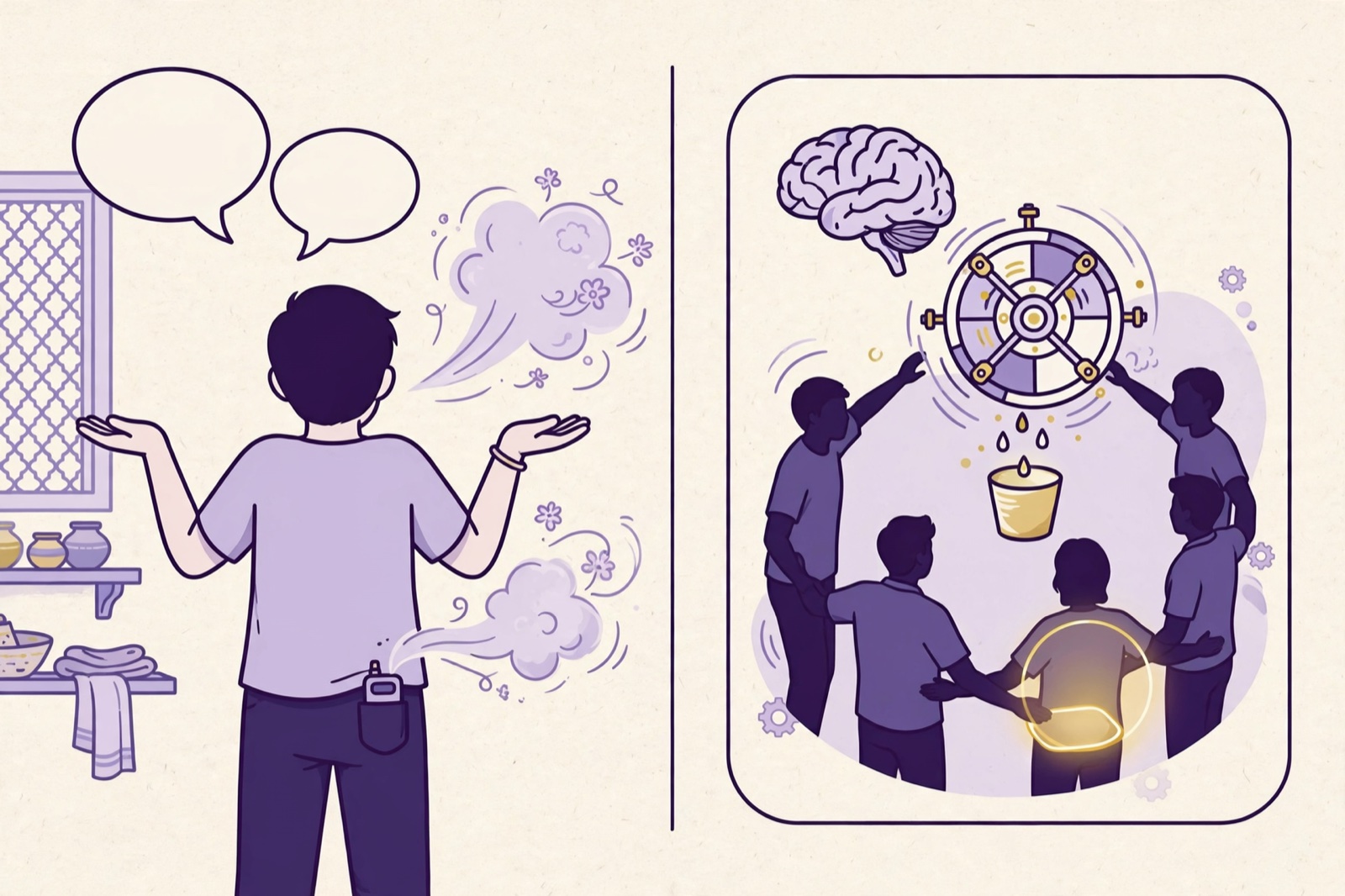
"Health thing we're solving together, not a crime we're sentencing. Map first, quit-plan second."
"The school called: mango scent in the washroom block, three students caught, yours among the named."
"Then the backpack search — a pastel device that looks like a highlighter and smells like dessert. You've never smoked a day in your life; neither, you thought, had he."
"Your mind races to the worst slides: addiction, dealers, ruined lungs, ruined future. His face, when confronted, does something you didn't expect — relief, almost. Like he'd been waiting to be caught."

The relief on his face is data: secrets are heavy, and getting caught can feel like rescue. Vaping at this age is overwhelmingly social (fitting in, curiosity, stress relief) — not criminal character. Nicotine dependence is real and must be handled, but the handling that works is medical-practical, not moral-panicked. Calm parents get quitters; panicked parents get better hiders.
- Vaping alone is a health issue for the protocol above. Vaping mixed with alcohol, cannabis, or pills is a different risk class — tell your doctor everything, no editing.
- Severe breathing difficulty, chest pain, or vomiting after vaping needs urgent medical care, not a family meeting — go now, discuss later.
- If devices are being sold to minors around the school, report to school authorities — supply-side action protects every child, not just yours.
14416 — 24x7, free
1800-599-0019 — 24x7, free
This guide is educational, not diagnosis or treatment. If you believe your teen is in immediate danger, contact professional help now — don't wait for the playbook.
The Behavior Decoder
Translating what you see into what their nervous system is actually experiencing
"'Everyone does it. It's just flavour, there's no nicotine in mine.'"
Everyone in my circle does it — refusing costs social rank daily. And I genuinely don't know what's inside; 'no nicotine' is what the seller said and what I need to believe.
"Irritability, restlessness, sneaking out — worse on days the device is confiscated"
My brain is learning to need the hits. The edginess isn't attitude — it's early withdrawal plus the shame of needing something I swore I controlled.
"'You drank/smoked at my age, don't be a hypocrite!'"
Fairness is my only shield here. If I can make this about your past, we stop talking about my present.
Why Teen Brains Are Vape-Optimised Targets
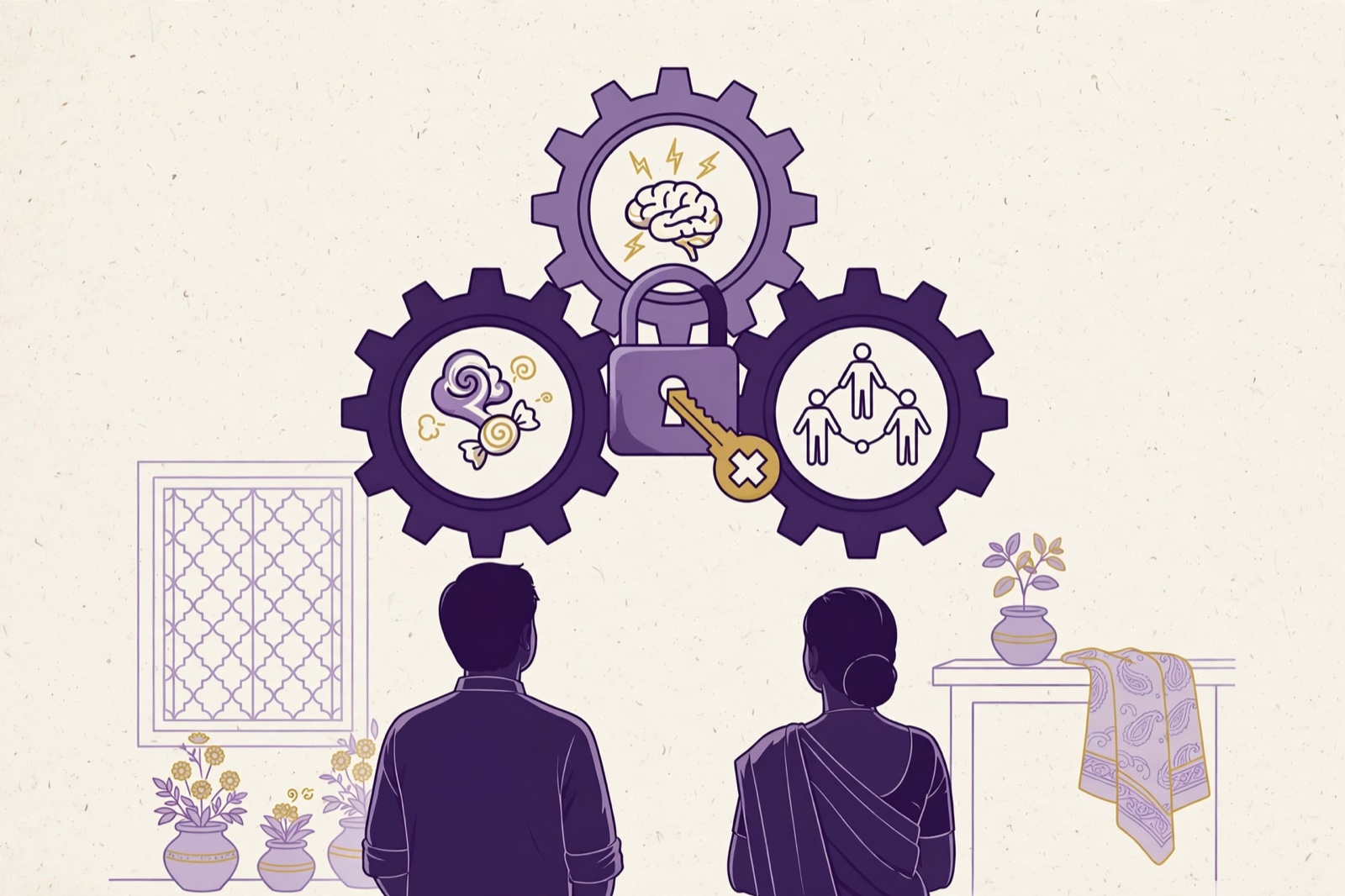
Adolescent brains are nicotine's ideal customers: the reward system is hyper-responsive while the brakes are unfinished, so dependence forms faster and at lower doses than in adults. Flavours aren't decoration — they're the delivery mechanism past the disgust reflex that protects against cigarettes. Socially, the device is currency: sharing a vape is sharing status, and refusal reads as rejection of the group, not of a chemical. This triple lock (fast dependence + flavour bypass + social currency) is why lectures fail — you're arguing chemistry, engineering, and tribe with words. What works: medicalise the dependence (it's a health issue, not a moral one), deglamourise the device (it's a subscription, not a personality), and protect the social exit (give him rank-safe ways to decline).
Natural Instincts That Accidentally Make It Worse
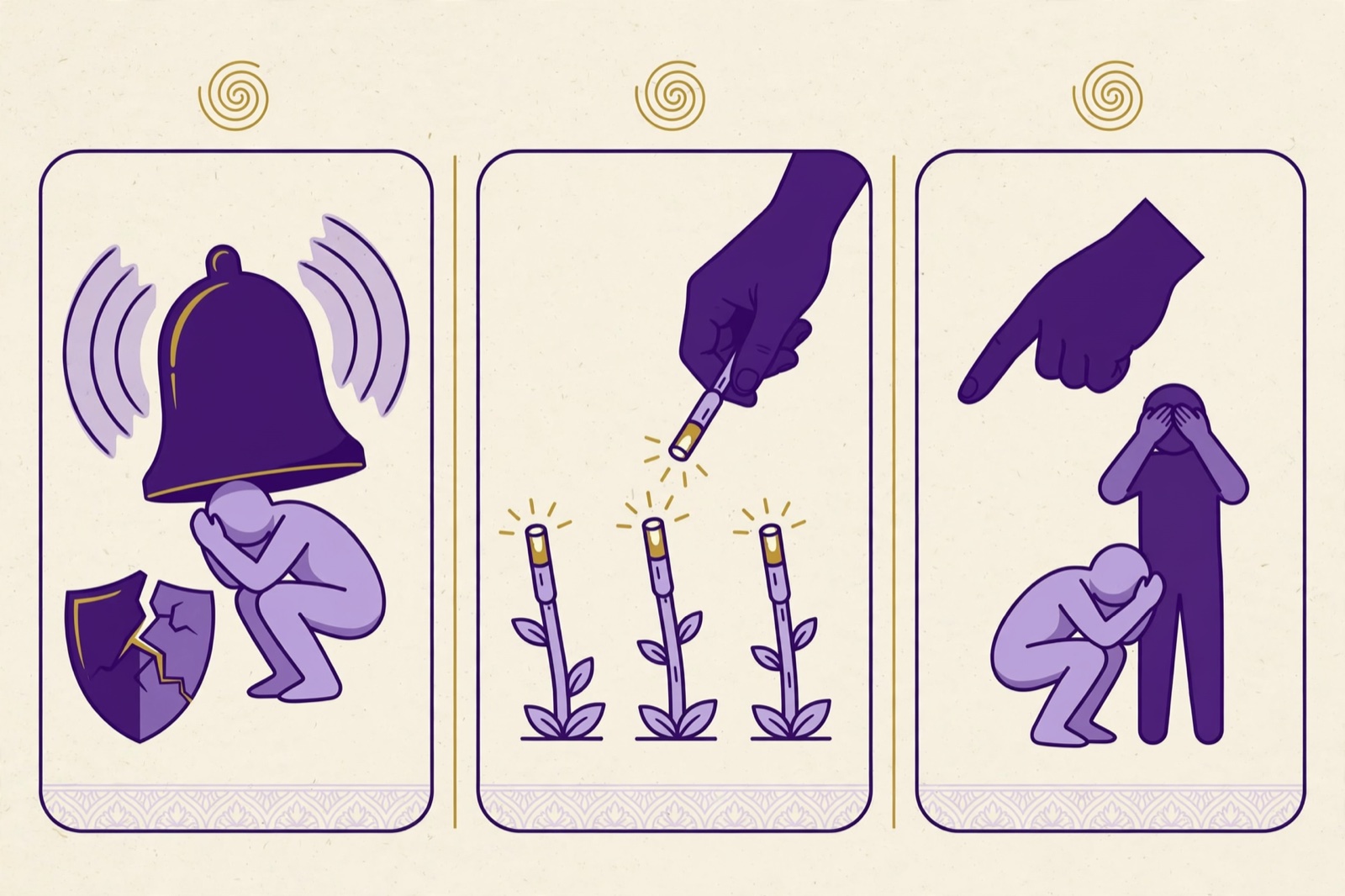
Every caring parent falls into these traps out of love, fear, or exhaustion. Here is what happens inside their nervous system and how to shift:
The Moral Panic Prosecution
Drug-talk, dealer-talk, future-ruined talk — maximum gravity, day one.
Teens discount exaggerated claims instantly ('they said the same about phones') — and the credibility you burn is the credibility the real facts needed.
Calm, specific, honest facts: nicotine rewires attention and mood, dependence builds in weeks at his age, quitting support exists. Truth, right-sized.
The Confiscation Arms Race
Search, seize, monitor money, check bags — total device lockdown.
Creates a smuggling economy: friends' devices, school stashes, pooled money. You lose visibility while believing you gained control.
One device conversation, then pivot to the exit plan: quitting support, rank-safe refusal lines, and check-ins about cravings — not bag checks.
The Hypocrisy Trial
Defending your own history instead of addressing his present.
Hands him the perfect deflection that works forever: every conversation becomes about you, never about the vape.
Concede in one line and return: 'Fair point — my past isn't the topic. Your lungs, your brain, your money: that's tonight's agenda.'
The Exit-Ramp Protocol (Vape Edition)
From discovery to quit-plan without a single shouting match.
The Calm Discovery Conversation
Curiosity first, consequences later (and smaller than you think).
- Open with relief, not rage: 'I'm glad I know — secrets about this stuff are heavy. Tell me the shape of it: how often, whose circle, what it costs you.'
- Map, don't prosecute: frequency, spend, where devices come from, who he'd struggle to refuse. Intelligence, not evidence.
- State the frame once: 'This is a health thing we're solving together, not a crime we're sentencing.'
Medicalise It (Doctor Visit, No Drama)
Dependence is a health file, not a rap sheet.
- Book a paediatrician/pulmonologist visit framed as a check-up, not a punishment expedition. A professional saying 'your lungs show X' lands where parental lectures can't.
- Ask about quit support explicitly: tapering plans, craving management, what withdrawal looks like at his level.
- Keep the doctor in the loop as ally: follow-ups are health appointments he keeps, not surveillance he endures.
Arm the Social Exits
Quitting fails at the peer moment, not the craving moment.
- Co-write refusal lines that preserve rank: 'I'm off it — coach benched my lungs' / 'nah, I'm good' + immediate subject change. Rehearse out loud, twice.
- Build one vape-free social anchor: a sport, a crew, an activity where the device isn't currency — belonging must come from somewhere.
- Never demand he ditch the friend group (impossible + isolating). Change his role inside it instead: the one who's quitting is a story, not a exile.
Track the Quit, Not the Kid
Progress gets measured in cravings managed, not devices seized.
- Weekly 5-minute check-ins: cravings this week? slips? what helped? — curious, never prosecutorial. Slips are data, relapses aren't verdicts.
- Celebrate streaks concretely: 2 weeks clean = the thing he wanted. Positive reinforcement outperforms surveillance by miles.
- If dependence persists despite support (daily use, failed quits), escalate to cessation counselling — nicotine dependence at 15 deserves professional tools, not just willpower.
What to Say Tonight: Word-for-Word Scripts
Save these to your phone or keep them in mind for your next interaction.
"'Okay. I'm going to say the most important thing first: I'm glad I know, and secrets about this stuff are heavy to carry alone. Tell me the shape of it — how often, whose circle — and then we'll solve the health part together. No shouting tonight; information first.'"
Seated, steady, device set aside (not waved as evidence).
Leads with relief (disarms shame), asks for mapping not confession, and frames health-vs-crime before positions harden.
"'Fair — genuinely fair. My past isn't the topic tonight, and using it as a shield keeps us off your lungs, your brain, and your money. I'll answer anything about my history after we sort your present. Deal?'"
Unruffled, brief, immediately pivoting back.
Concedes without derailing (removes the shield's power), then re-centres on the three things that are actually his: lungs, brain, money.
"'Quit-log time, two minutes: cravings this week, scale of 1-10? Any slips — no penalty for telling, data only. What helped most when it got loud?'"
Routine, almost boring. Same time weekly.
Ritualises honesty (boring = safe), separates data from verdicts, and builds the craving-management muscle that actually sustains quits.
Medicalise dependence, deglamourise the device, protect the social exit.
Seated, steady, device set aside (not waved as evidence)
"Health thing we're solving together, not a crime we're sentencing. Map first, quit-plan second."
The Underlying Psychological Mechanics
The Product Is the Problem (Design, Not Just Drug)
Why 'Just Say No' Fails the Math
When It's Beyond Parenting Protocol
All Situations in Family Shifts, Gender & Sensitive Realities
When Teenage Sons Push Mothers Away
Why adolescent boys pull away to assert masculine independence, and how moms connect without smothering.
When the 'Daddy's Girl' Goes Silent
Why daughters pull away from their fathers during puberty, and how dads can rebuild quiet trust.
Body Insecurities & Mirror Anxiety
Secretive eating, skipping meals, mirror obsession, and comparing real bodies to curated filters.
Secret Dating, First Crushes & Phone Secrecy
Navigating first romantic attachments, late-night texting, and heartbreak without interrogation.
Teens in Controlling Peer / Dating Relationships
Losing their identity, being manipulated by partners or friends, and helping them step away safely.
Caught in a Lie (Secret Accounts & Broken Trust)
Why teens lie to avoid humiliation or protect privacy, and how to rebuild honesty without turning into police.
Vaping, Smoking & Substance Experimentation
Finding pods, smelling smoke, peer pressure, and holding immovable health boundaries without hysteria.
Self-Harm & Overwhelming Emotional Storms
Cutting, severe emotional distress, and emergency psychological first aid for terrified parents.
Being Bullied & Excluded by Peers
Cyberbullying, exclusion from group chats, school yard cruelty, and rebuilding inner safety.
Divided Households & Co-Parenting Friction
Managing conflicting rules between two homes without putting the teenager in the middle of adult resentment.
What to Do When You Find Pornography on Their Phone
Discovered screenshots, unspeakable questions — respond with calm project-management, not catastrophe.
The Hostel & College Transition Playbook
Packing lists are easy; leaving home isn't — prepare the 18-year-old and yourself for the first real goodbye.
Don't Try to Fix Everything Tonight. Just Start Here.
Parenting shifts happen in tiny, consistent micro-moments. Choose the resource that fits your immediate need:
The Quit-Plan Tracker (Printable)
A 1-page craving log, rank-safe refusal lines, and the weekly check-in template.
Check Your Teen's Hidden Need Profile
Answer 6 quick questions to discover the exact root driver behind your teen's specific behavior patterns.
Keep Them Safe
Work 1-on-1 to reset your home environment, resolve chronic conflicts, and build lasting connection.
Cross-Chapter Recommended Guides
When Young Love Turns Controlling: Spotting Toxic Teen Relationships Early
Teen controlling behaviour hides inside the language of love ('if you loved me you'd...'). Learn the five flags, why banning backfires hardest here, and the exit-ramp protocol that keeps you as the safe harbour.
The Empty Weekend: When Your Teen Has Nowhere to Go and No One to Call
Weekend after weekend at home while classmates' stories scroll past is not a scheduling problem — it is a belonging wound. Learn the bridge protocol: regulate the shame, build one micro-social rep at a time, and never pity-recruit.