
Family Shifts, Gender & Sensitive Realities
She Has a Boyfriend: The Father-and-Mother Playbook for First Love
The secret relationship you just discovered, the boy you haven't met, and the panic that says forbid everything. Structure beats surveillance — here's the dating framework that keeps her safe AND talking.
Tribal Belonging & Peer Status
Evolutionary rewiring that prioritizes peer acceptance and social calibration above family approval.
The Ban Hammer
Banning converts a visible relationship into a secret one — same boy, zero oversight, plus daily lying practice.
"Same boy, daylight or shadows — your pick. We build it visible, together, boringly, safely."
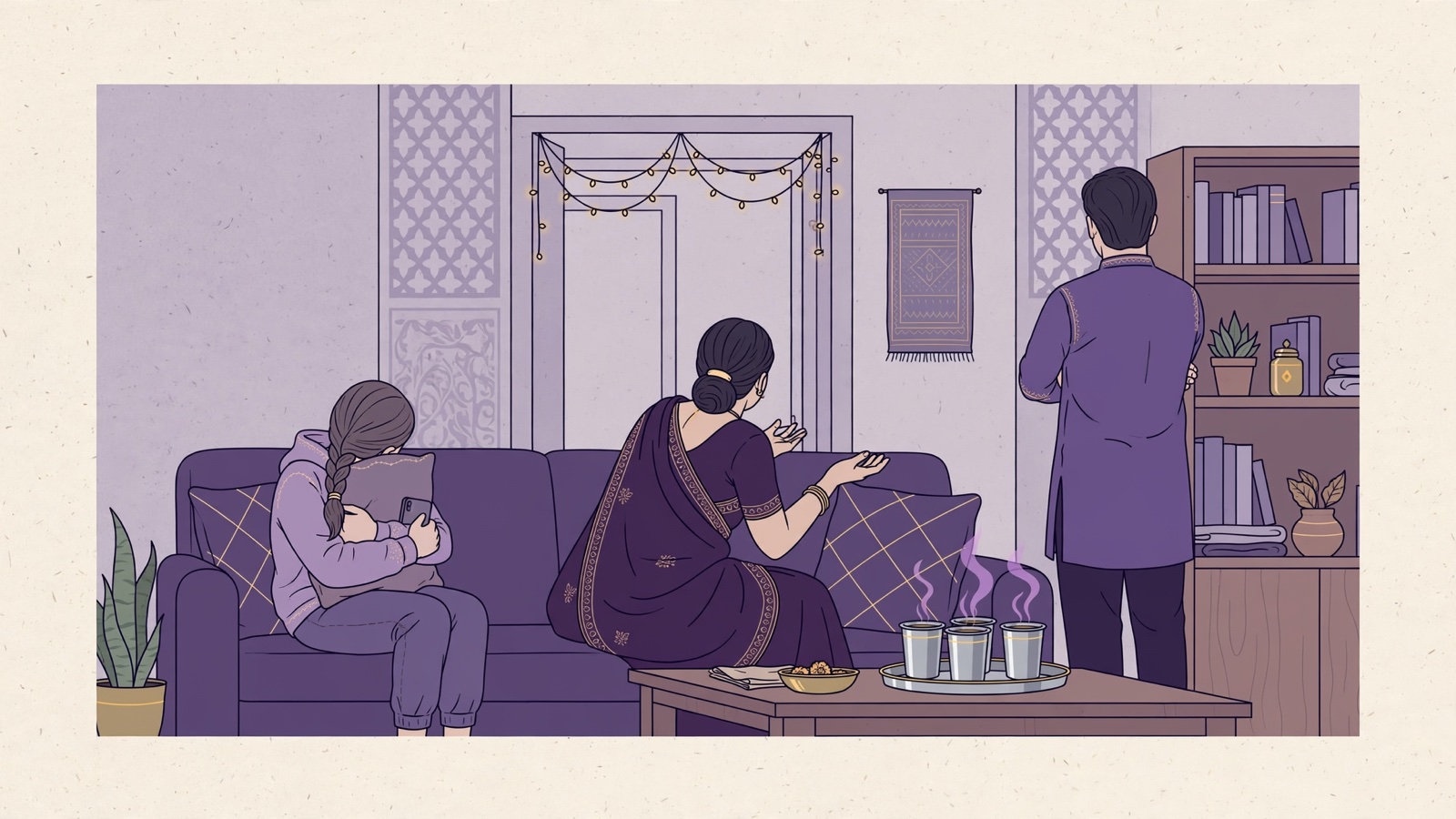
"You found the chats by accident — her phone lit up on the dining table while she was in the shower. Not filth. Worse, in some ways: tenderness. Good mornings. A boy's name saved with a white heart."
"Your first impulse splits you in half: confront her tonight with screenshots, or pretend you saw nothing while quietly dying. You do the third thing — you tell your spouse, and now there are two panicking adults and one unsuspecting teenager."
"She's fourteen. He's fifteen. And the only thing you know for certain is that whatever you do next will teach her whether love is something you bring home or something you hide."
First relationships at this age are developmentally normal — attachment practice with training wheels. The danger was never the boyfriend; it's the secrecy architecture your reaction builds around him. Parents who build a visible, boring, rule-bound dating framework keep sight of the relationship. Parents who ban it lose sight of everything: the boy, the risks, and eventually the daughter.
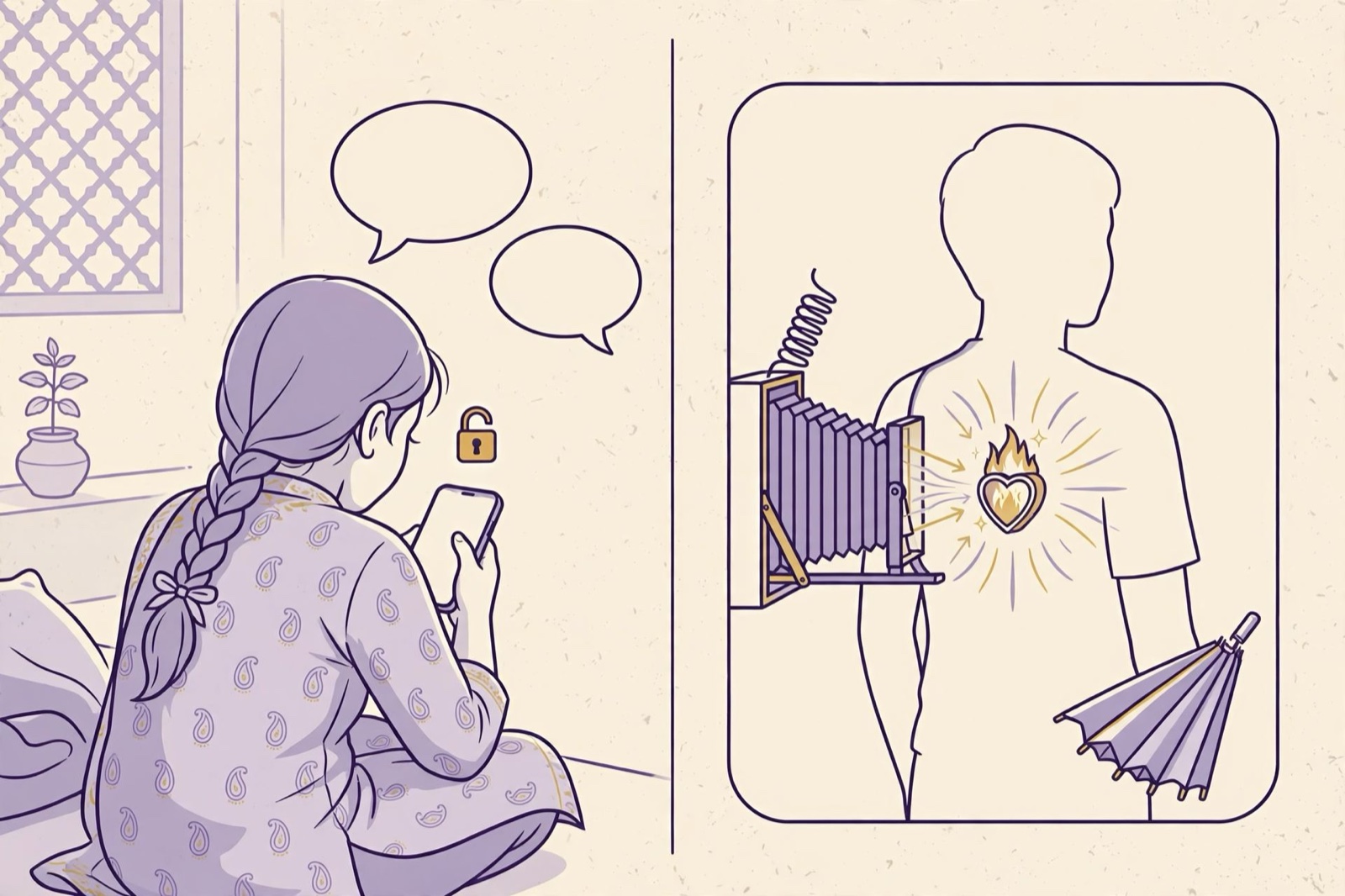
The Behavior Decoder
Translating what you see into what their nervous system is actually experiencing
"Total secrecy: deleted chats, second accounts, friends sworn to silence"
If they find out, they'll end it or explode — so the relationship must live off-grid. Secrecy isn't deceit; it's the only permit office open.
"'You don't understand, he's different! You never let me do ANYTHING!'"
This feels like the most real thing that's ever happened to me and they're treating it like a discipline problem. The intensity is the point — first love is neurologically supposed to feel total.
"Grades dip, friends fade, all attention narrows to the phone"
The relationship is eating the rest of my life because I have no model for дозиng it — nobody taught me what healthy pacing looks like, so intensity IS the relationship.
Limerence Is Chemistry, Not Character
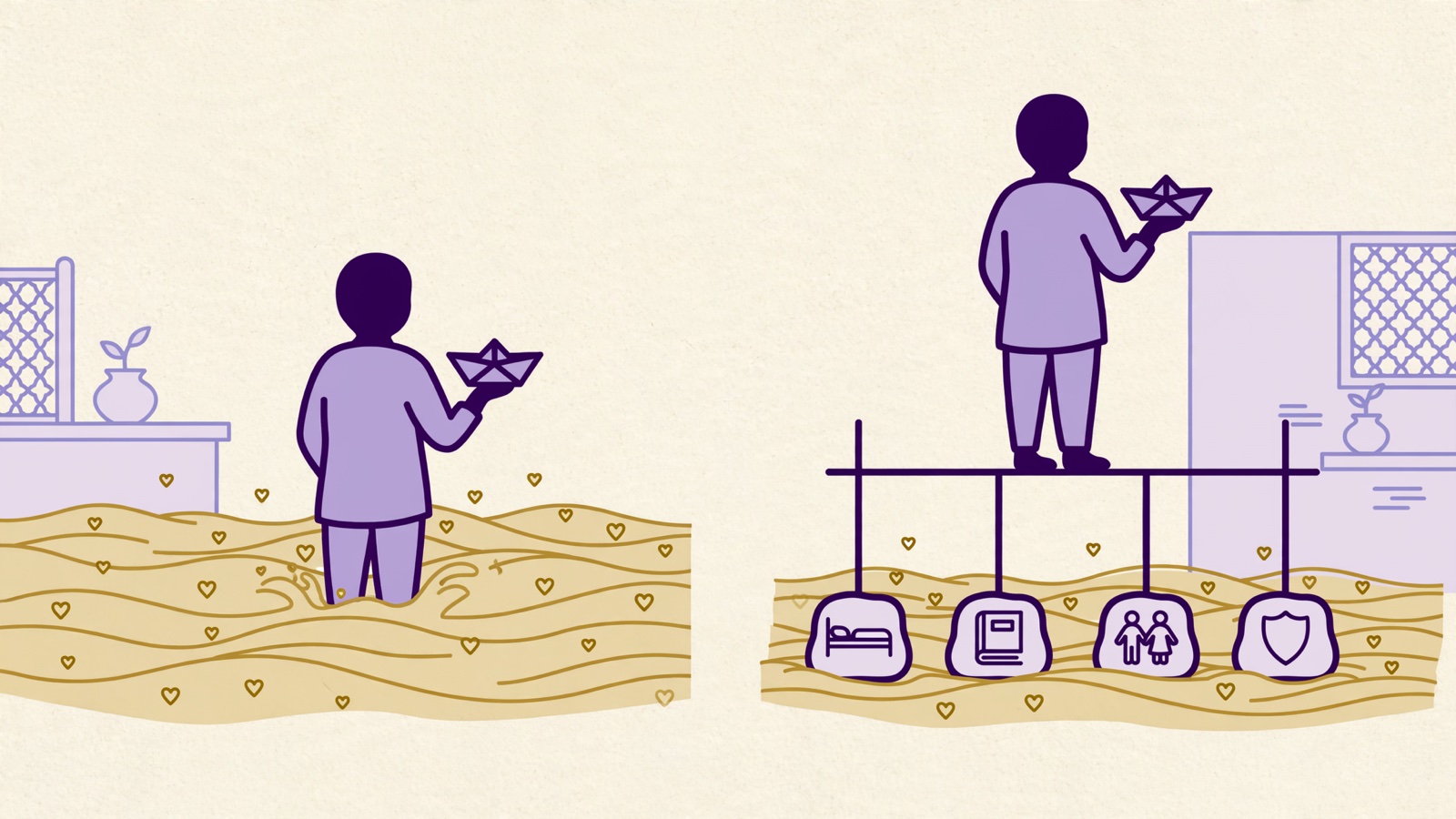
First love runs on the same neurochemistry as obsession: dopamine novelty spikes, norepinephrine arousal, serotonin drops that mimic OCD. The teen brain — with its still-maturing brakes — experiences this at full volume with no dimmer. That's why first relationships feel total and why reasoning with a limerent teen fails: you're arguing with a neurochemical flood using vocabulary. The flood itself is normal and time-limited (limerence burns 6–18 months typically). What matters isn't stopping the feeling — it's scaffolding the behaviour while the feeling runs: sleep, school, friendships, and bodily autonomy held steady by structure while the storm passes through. Parents who provide the scaffolding get thanked at 25. Parents who fight the feeling get edited out of the story.
Natural Instincts That Accidentally Make It Worse
Every caring parent falls into these traps out of love, fear, or exhaustion. Here is what happens inside their nervous system and how to shift:
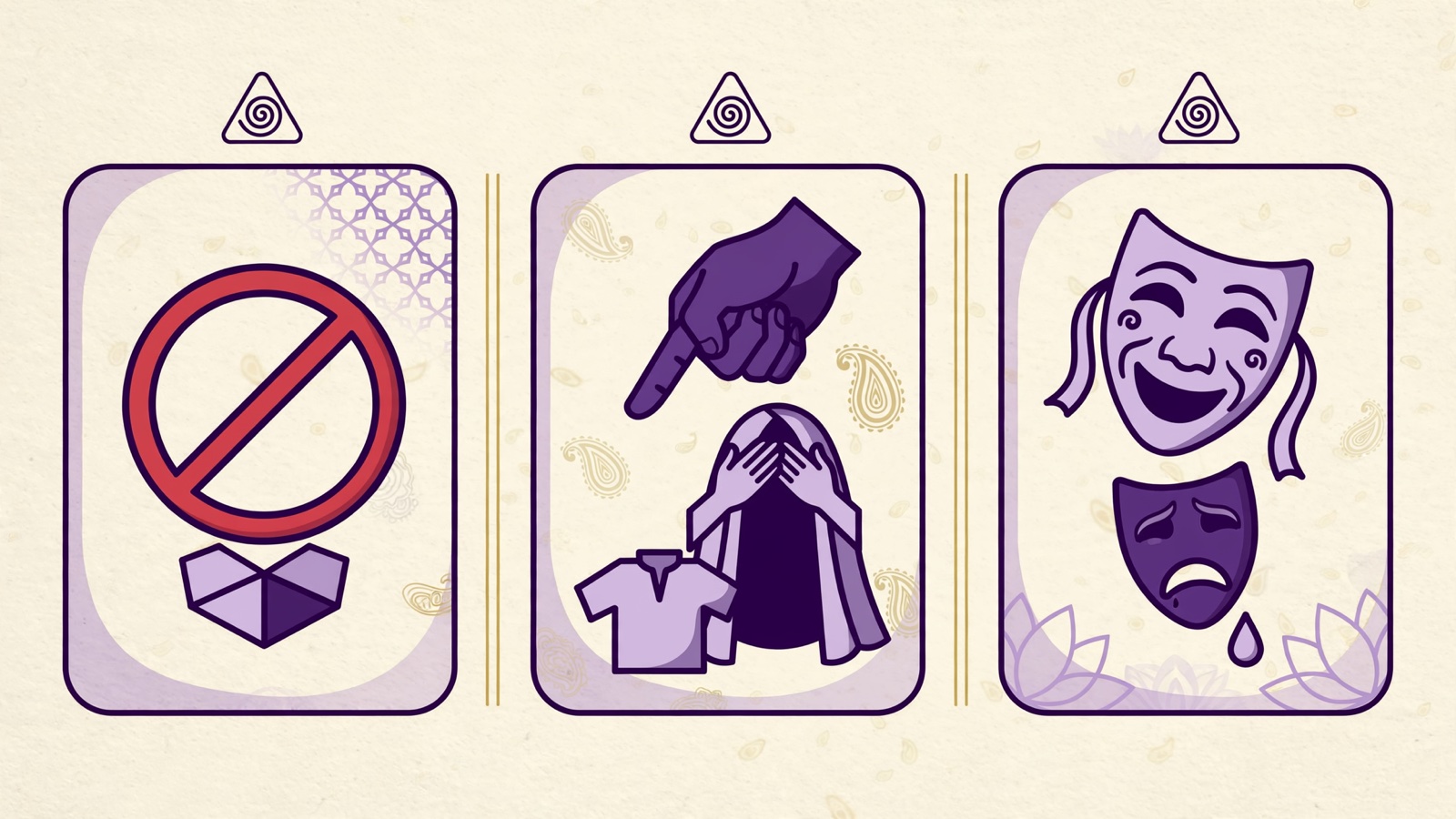
The Ban Hammer
'No boyfriends till you're 18. End it today or lose the phone.'
Converts a visible relationship into a secret one overnight — same boy, zero oversight, plus lying practice. The ban is the single fastest route to everything you fear.
Replace the ban with the framework (below): visible, bounded, boring dating beats secret dating every time — structurally, not morally.
The Boy Prosecution
'What kind of boy messages a 14-year-old? His parents should know! He's trouble.'
Attacks her judgement and her chosen person simultaneously — she must now defend him to defend herself, fusing loyalty to him against the family.
Meet the boy early, warmly, briefly. Known boys are safer than shadow boys — and meeting him signals confidence, not approval of everything.
The Intensity Mockery
'Oh god, the drama. Wait till you're older, you'll laugh.'
Teaches that her deepest feelings are comedy material — so the next big feeling (heartbreak, pressure, coercion) also stays hidden.
Honour the scale while holding the structure: 'This feeling is real and huge — that's exactly why the guardrails exist, to protect something this big.'
The Visible Dating Framework
Boring, explicit, co-created rules that keep the relationship in daylight — where you can see risks early.
Acknowledge Before You Regulate
The first conversation decides whether the next hundred happen with you or without you.
- Open warm, not prosecutorial: 'I know about [name]. I'm glad it's someone who makes you happy — and because it matters, we're going to build it properly, together.'
- No screenshots-as-evidence ambushes. If you found out by snooping, own it briefly and move on — the framework matters more than the discovery.
- Ask to hear about him with genuine curiosity first. Intelligence gathered warmly beats intelligence extracted coldly.
Meet the Boy (Early, Briefly, Warmly)
Known quantities are manageable; shadows aren't.
- Invite him for a specific low-stakes thing: dinner, a family outing segment, chai. Fifteen minutes of normal does more than a month of speculation.
- Be warm, be observant, be brief. You're gathering data, not granting a visa — but the warmth is what keeps the door open.
- After: debrief with HER, not about him ('how did that feel?') — never a verdict ('I don't like him').
Co-Create the House Dating Policy
Written, boring, mutual — the opposite of dramatic.
- Non-negotiables (yours): group settings over isolated ones for now; phone curfews stand; school and sleep protected; any pressure — from anyone — gets reported with zero punishment for reporting.
- Negotiables (hers): which outings, what check-in rhythm feels respectful, how introductions happen.
- The reporting amnesty is the load-bearing wall: 'Anything you tell us, even bad news, gets help first and consequences never for telling.'
Rehearse the Exits (The Real Safety Work)
Pressure scenarios practised cold, so they work hot.
- Role-play the lines: saying no to anything physical, leaving a situation, calling you for pickup with a code word — no questions asked, ever.
- The code word is sacred: any use gets instant pickup, zero interrogation that night, debrief only next day if she initiates.
- Revisit quarterly as the relationship evolves — including the breakup protocol (see scripts): most first loves end, and the ending is when she's most vulnerable.
What to Say Tonight: Word-for-Word Scripts
Save these to your phone or keep them in mind for your next interaction.
"'I want to talk about something I learned, and I want to start by saying: I'm glad someone makes you happy. His name's [name], right? Tell me about him — for real, I'm asking as someone who remembers being fourteen, not as the rule police. The rules come after, and there will be some — but first, him.'"
Warm, seated together, phones away (both of yours too).
Leads with validation instead of evidence, requests her narrative first (intelligence + trust), and previews rules honestly rather than ambushing with them.
"'You're right that I don't feel what you feel — nobody can feel it for you. What I do know is the shape: first love feels total because the brain is doing something new at full volume. That bigness is exactly why we're building guardrails — you protect precious things with fences, not with wishes.'"
Respectful of the intensity, steady on the structure.
Honours the feeling as real (no mockery), explains the bigness with science instead of dismissal, and reframes guardrails as protection of something precious.
"'Come here. This is the worst part and it's allowed to be the worst part — no lectures, no I-told-yous, not now, not ever. Ice cream or walk? You pick, I'm on both teams tonight.'"
Physical availability first, words minimal. Stay.
Withholds every vindicated instinct (which would end future confiding forever) and converts the crisis into the exact trust deposit the whole framework was built for.
Structure, not surveillance: visible, bounded, boring dating beats secret dating every time.
Warm, seated together, phones away (both of yours too)
"Same boy, daylight or shadows — your pick. We build it visible, together, boringly, safely."
The Underlying Psychological Mechanics
Why Banning Fails Structurally
The visible framework inverts all of it: the relationship exists in daylight where risks are observable, lying is unnecessary, and help is one sentence away. Same boy, radically different risk profile — determined entirely by parental architecture.
The Amnesty Clause Is Load-Bearing
Fathers, Read This Twice
All Situations in Family Shifts, Gender & Sensitive Realities
When Teenage Sons Push Mothers Away
Why adolescent boys pull away to assert masculine independence, and how moms connect without smothering.
When the 'Daddy's Girl' Goes Silent
Why daughters pull away from their fathers during puberty, and how dads can rebuild quiet trust.
Body Insecurities & Mirror Anxiety
Secretive eating, skipping meals, mirror obsession, and comparing real bodies to curated filters.
Secret Dating, First Crushes & Phone Secrecy
Navigating first romantic attachments, late-night texting, and heartbreak without interrogation.
Teens in Controlling Peer / Dating Relationships
Losing their identity, being manipulated by partners or friends, and helping them step away safely.
Caught in a Lie (Secret Accounts & Broken Trust)
Why teens lie to avoid humiliation or protect privacy, and how to rebuild honesty without turning into police.
Vaping, Smoking & Substance Experimentation
Finding pods, smelling smoke, peer pressure, and holding immovable health boundaries without hysteria.
Self-Harm & Overwhelming Emotional Storms
Cutting, severe emotional distress, and emergency psychological first aid for terrified parents.
Being Bullied & Excluded by Peers
Cyberbullying, exclusion from group chats, school yard cruelty, and rebuilding inner safety.
Divided Households & Co-Parenting Friction
Managing conflicting rules between two homes without putting the teenager in the middle of adult resentment.
What to Do When You Find Pornography on Their Phone
Discovered screenshots, unspeakable questions — respond with calm project-management, not catastrophe.
The Hostel & College Transition Playbook
Packing lists are easy; leaving home isn't — prepare the 18-year-old and yourself for the first real goodbye.
Don't Try to Fix Everything Tonight. Just Start Here.
Parenting shifts happen in tiny, consistent micro-moments. Choose the resource that fits your immediate need:
The Visible Dating Framework (Printable)
A 1-page co-creation template: non-negotiables, negotiables, the amnesty clause, and exit rehearsals.
Check Your Teen's Hidden Need Profile
Answer 6 quick questions to discover the exact root driver behind your teen's specific behavior patterns.
Open The Line
Work 1-on-1 to reset your home environment, resolve chronic conflicts, and build lasting connection.
Cross-Chapter Recommended Guides
When Young Love Turns Controlling: Spotting Toxic Teen Relationships Early
Teen controlling behaviour hides inside the language of love ('if you loved me you'd...'). Learn the five flags, why banning backfires hardest here, and the exit-ramp protocol that keeps you as the safe harbour.
Mirrors, Meals, and Reels: When Your Daughter Starts Hating How She Looks
Body hatred at 14 isn't vanity — it's a ranking system she didn't choose, running on images she can't compete with. Media literacy plus unconditional regard: the two-track response that actually moves the needle.