
Task Chunking & Micro-Sprint Canvas
Break down overwhelming multi-chapter syllabi into 10-minute conquerable units.
Part of the Tier 1 Clinical Area: ADHD & Attention Clinical Topic Hub →
Interactive Clinical Worksheet
Saved in browser · 100% private
Task Chunking & Micro-Sprint Canvas
Break down overwhelming multi-chapter syllabi into 10-minute conquerable units.
A visual scaffolding sheet that slices intimidating projects into non-threatening 10-minute micro-tasks. One line per step in your own words. Short, honest answers are easier to trust — there is no wrong answer to a personal reflection, only a true one.
Write the intimidating project: e.g., 'Finish History Chapter 8 and 9 revision.'
Break it into Phase 1: Resource Gathering, Phase 2: Core Concept Reading, Phase 3: Notes, Phase 4: Self-Quiz.
What is an action so small it feels silly to avoid? (e.g., 'Print formula sheet and highlight 2 lines').
Check off the starter. Decide if you want to stop or ride the momentum for 10 more minutes.
At a Glance · Quick Protocol Summary & Key Search Answers
What Is The Task Chunking & Micro-Sprint Canvas?
A visual scaffolding sheet that slices intimidating projects into non-threatening 10-minute micro-tasks.
At the start of study sessions when feeling overwhelmed.
- 1Name the Monster Task: Write the intimidating project: e.g., 'Finish History Chapter 8 and 9 revision.'
- 2Reverse-Engineer 4 Physical Phases: Break it into Phase 1: Resource Gathering, Phase 2: Core Concept Reading, Phase 3: Notes, Phase 4: Self-Quiz.
- 3Define the 10-Minute Starter: What is an action so small it feels silly to avoid? (e.g., 'Print formula sheet and highlight 2 lines').
- 4The Done Checkmark Celebration: Check off the starter. Decide if you want to stop or ride the momentum for 10 more minutes.
Overview & Purpose
A visual scaffolding sheet that slices intimidating projects into non-threatening 10-minute micro-tasks.
Who Can Benefit Most From This Worksheet:
- Students facing massive syllabus backlogs who do not know where to begin.
Cognitive Load Theory & Activation Energy Reduction
When presented with a massive syllabus, working memory is overloaded with unorganized tasks, triggering freeze and procrastination. By physically reverse-engineering the project into sequential 10-minute units, activation energy drops below threshold, allowing immediate task initiation.
Core Psychological Principles:
How to Complete This Worksheet (Step-by-Step)
Follow each step in sequence. The sequence itself is the clinical method.
Name the Monster Task
Write the intimidating project: e.g., 'Finish History Chapter 8 and 9 revision.'
Reverse-Engineer 4 Physical Phases
Break it into Phase 1: Resource Gathering, Phase 2: Core Concept Reading, Phase 3: Notes, Phase 4: Self-Quiz.
Define the 10-Minute Starter
What is an action so small it feels silly to avoid? (e.g., 'Print formula sheet and highlight 2 lines').
The Done Checkmark Celebration
Check off the starter. Decide if you want to stop or ride the momentum for 10 more minutes.
Ananya's Biology Backlog Slicing
Ananya had fallen 5 weeks behind in Human Physiology and was procrastinating by reorganizing her stationery.
Sample Completed Responses:
Guidance for Parents & Caregivers
How to support your teenager through this exercise without triggering defensiveness, lecturing, or power struggles.
- •Praise the completion of the 10-minute starter.
- •Do not say 'Is that all you did in 10 minutes?'.
Common Pitfalls & How to Avoid Them
Clinical Disclaimer & Emergency Mental Health Support
This worksheet is an educational instrument designed for self-reflection and coaching. It is not a substitute for clinical psychiatric care, crisis intervention, or a formal diagnostic evaluation. If you or a teenager is in acute psychological distress, connect with trained professionals:
Frequently Asked Questions
Clinical References & Scientific Citations
- Sweller, J. (2011). Cognitive load theory. — Psychology of Learning and Motivation (2011)
Overwhelmed by study backlogs?
Master strategic study systems in our Learn Like a Pro™ program.
Ready for the Full 14-Day Protocol: The ADHD Adolescent Executive Functioning Workbook
You've completed the foundational worksheet. Graduate to the comprehensive 18-page clinical workbook with 4 structured modules.
Related Worksheets & Tools
Evidence-based developmental and clinical tools for students, parents, and schools.
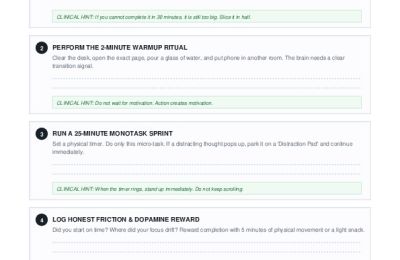
ADHD Daily Focus & Reset Planner
Estimate task duration, chunk steps, and protect study blocks from dopamine traps.
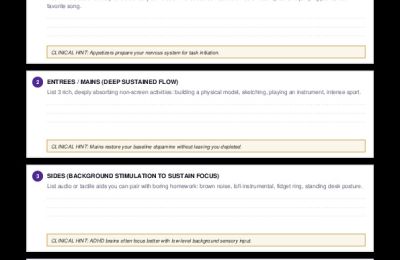
ADHD Dopamine Menu & Energy Restorer
Replace doom-scrolling with quick appetizers, deep mains, and gentle sides.