
Parenting Styles, Boundaries & Spousal Alignment
Connect Before You Direct: The Golden Rule of Adolescent Cooperation
Why barking commands triggers biological resistance in the adolescent brain, and how a 2-minute connection ritual unlocks voluntary cooperation.
Co-Regulation & Attunement
Testing adult boundaries to verify that the parent remains calm, sturdy, and emotionally regulated when they spiral.
The Command-First Reflex
Leading with directives triggers biological resistance before the words even register.
"Connect before you direct: two minutes of warmth unlocks two hours of cooperation."
"It's 7:45 PM. Dinner is hot on the dining table. Your teenager is sitting on the sofa staring into their phone with headphones in."
"From across the room, you call out: 'Put your phone away and come set the table right now!' Nothing happens. No movement. You call out louder: 'Did you hear me? Put that phone down!' They mutter 'Yeah, in a second,' without glancing up."
"By the third time, you are shouting: 'Why do I have to repeat myself five times every single night? Do you think I'm your servant?' Your teen rolls their eyes, stomps into the dining room, throws the forks on the table, and mutters: 'Why are you always screaming at me?'"

You are not failing as a parent, and your teenager is not plotting to disrespect you. What happened in those two minutes was a predictable neurobiological chain reaction: a command issued across physical and emotional distance is processed by the adolescent brain as an attack on autonomy.
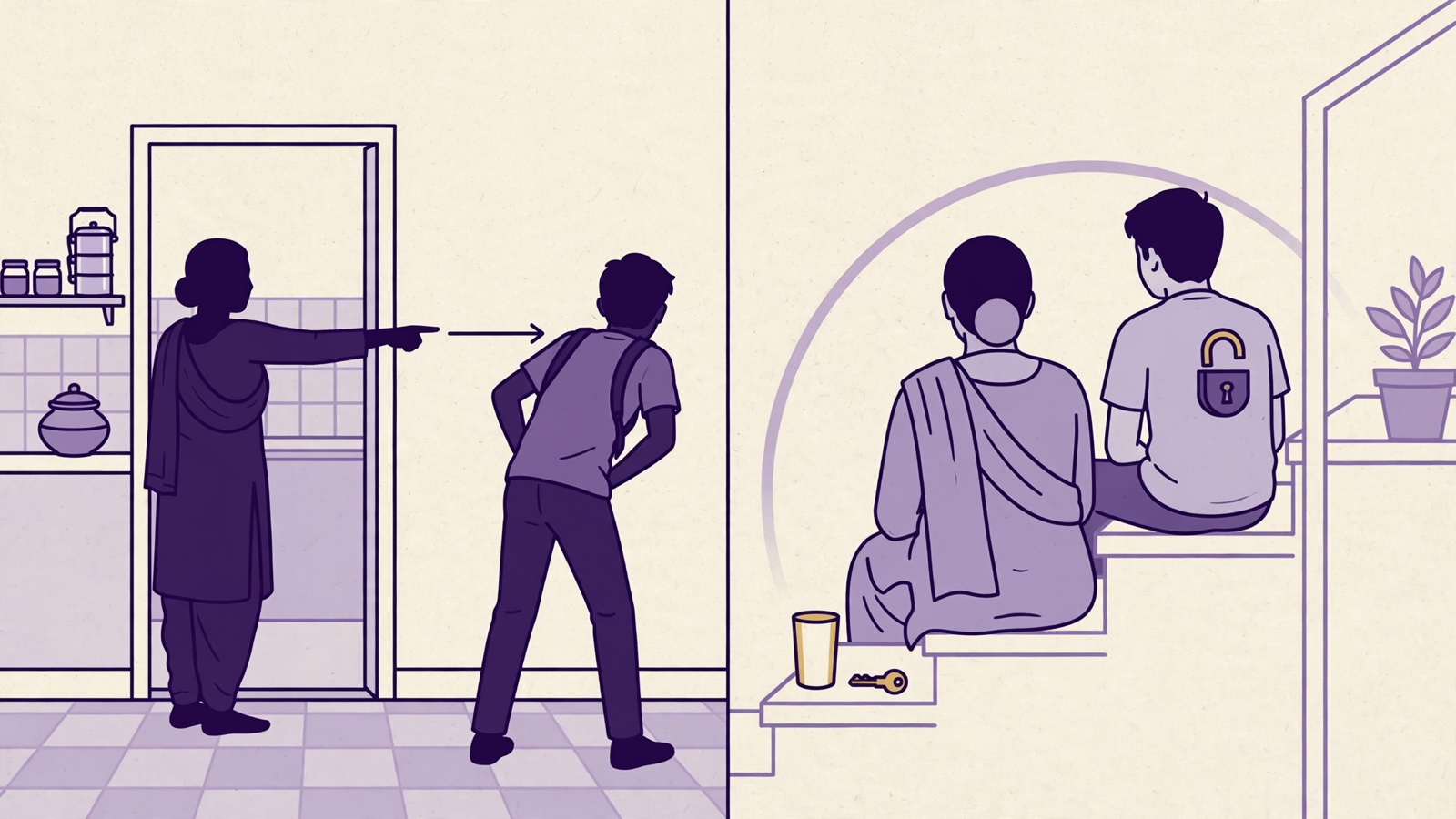
The Behavior Decoder
Translating what you see into what their nervous system is actually experiencing
"Yeah, in a minute! (while still scrolling)"
Auditory filtering & dopamine immersion. The adolescent brain cannot seamlessly switch task contexts without physical proximity and visual attunement.
"Why are you always screaming at me?!"
Their nervous system has registered your tone as relational threat. They are no longer thinking about dinner; they are defending their dignity.
"Heavy sigh, eye-roll, and aggressive fork-slamming."
Passive compliance paired with behavioral protest. They are complying with the action while protecting their internal autonomy through defiance.
Mirror Neurons & The Autonomy Defense Circuit
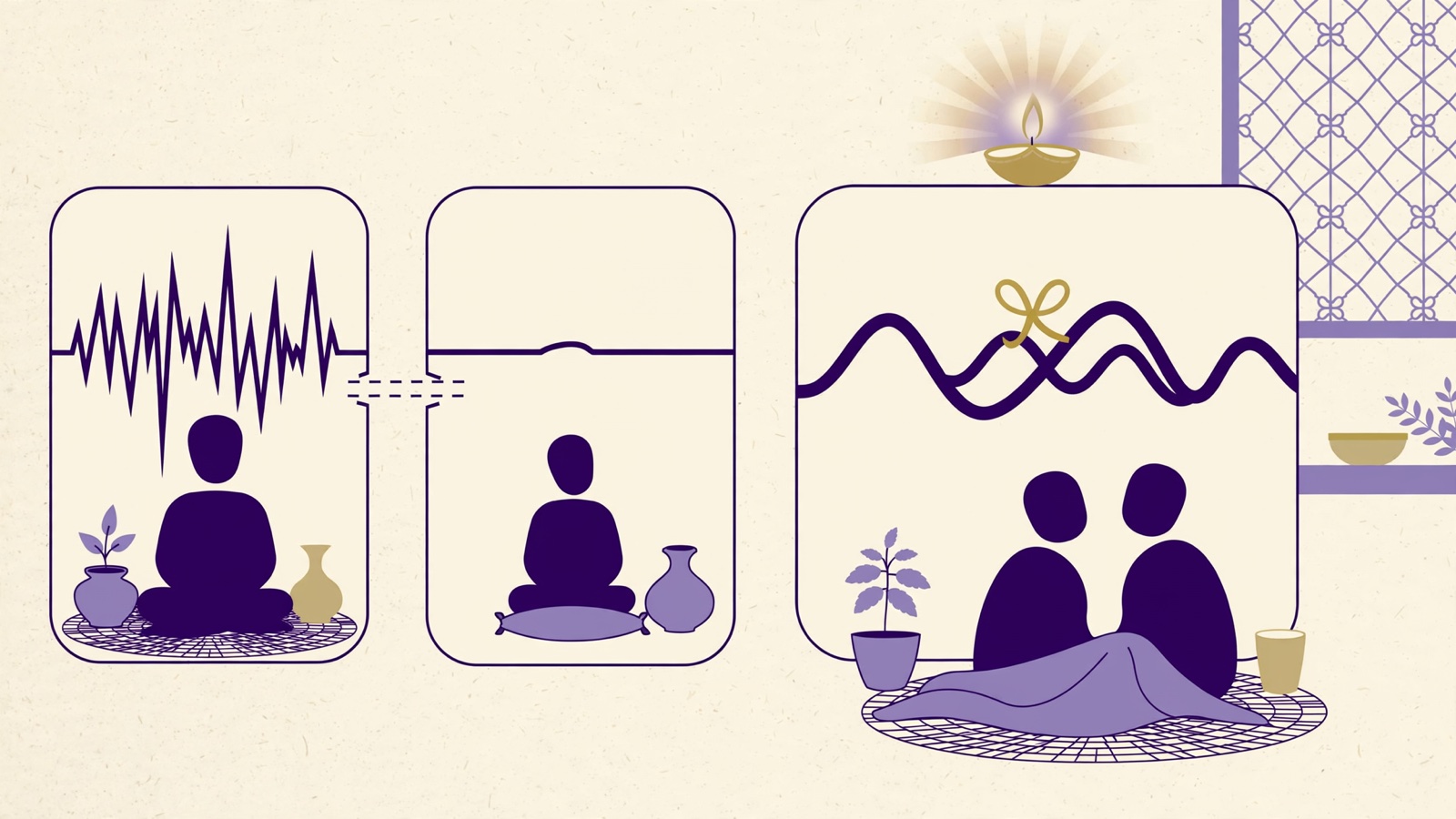
When an adult shouts a directive across a room ('Do your homework!', 'Put your phone away!'), the adolescent amygdala interprets the sudden bark as social dominance and coercion. Because the prefrontal cortex is still pruning, teens are biologically hypersensitive to feeling bossed around like a 6-year-old. When you connect before you direct — entering their physical field of view, making warm eye contact, or touching their shoulder — the nervous system registers relational safety through co-regulation, down-regulating the fight-or-flight reflex and opening the cognitive gateway for voluntary cooperation.
Natural Instincts That Accidentally Make It Worse
Every caring parent falls into these traps out of love, fear, or exhaustion. Here is what happens inside their nervous system and how to shift:
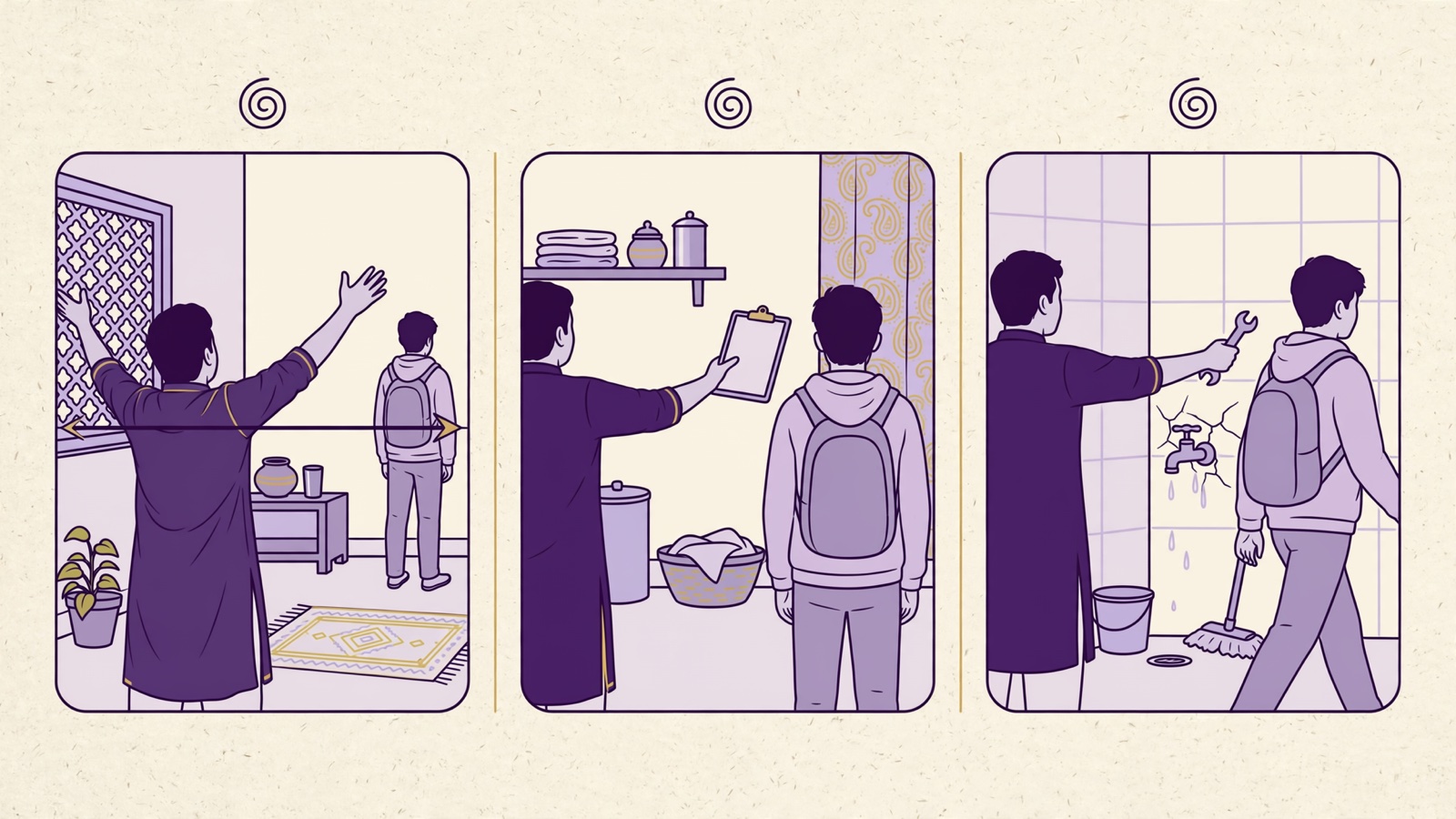
The Long-Distance Bark
Yelling instructions from the kitchen while the teen is in their bedroom.
Requires zero relational investment from the parent, so it generates zero cooperation from the teen.
Walk into their room, pause, establish eye contact or gentle proximity before saying a single word.
The Rapid-Fire Command Barrage
Listing 5 chores at once: 'Put your shoes away, wash your hands, unpack your bag, set the table, and study.'
Overwhelms immature executive functioning. The teen shuts down and does none of them.
One clear, singular request at a time with a collaborative runway.
Attitude Policing
Demanding that they complete chores with a cheerful, joyful smile on their face.
Invalidates their emotional autonomy. Forces them into dishonesty or open rebellion.
Allow them to feel grumpy about chores as long as they follow through: 'You don't have to love taking out the trash, but the trash still needs to go outside.'
The 2-Minute Connect-Before-Direct Protocol
A 4-step sequence that secures adolescent cooperation within 120 seconds without raising your voice.
Enter Their Physical Field of View
Zero shouting across rooms or through closed doors.
- Walk into the room where your teen is. Stand or sit at their eye level.
- Do not speak immediately. Wait 10 seconds for their auditory focus to shift to your presence.
The 30-Second Rapport Bridge
Validate their current world before asking them to enter yours.
- Ask about or acknowledge what they are doing: 'What level are you on?' or 'That look like a funny video.'
- This releases oxytocin and disarms the amygdala's threat detection.
The Clear, Firm Runway
Provide a predictable buffer before action is required.
- Give a 5-minute countdown: 'Dinner is on the table in 5 minutes. Find a stopping point so we can eat together.'
- Collaborative language: 'Do you want to set the table now, or would you rather clear the plates after dinner?'
The Silent Anchor (No Nagging)
Hold quiet space until the agreement is fulfilled.
- When the 5 minutes arrive, gently return: 'Ready for dinner.'
- Warm smile, no snarky remarks ('Finally!') when they show up.
What to Say Tonight: Word-for-Word Scripts
Save these to your phone or keep them in mind for your next interaction.
"'Hey, what match are you playing? ... Looks intense. Dinner is hot on the table in 5 minutes. Find a save point or wrap up this round so we can eat together.'"
Warm, unhurried, standing or sitting beside them. Friendly tone.
Acknowledges their current world before asking them to leave it. Gives a predictable runway to wrap up dopamine stimulation.
"'I brought you some sliced apples and cold water. I know you've had a brutally long day at school. Take 10 minutes to enjoy this, and then let's get physics done so your evening is free.'"
Nurturing, collaborative, non-confrontational.
Measures blood sugar and nervous system fatigue first. Positions homework as a hurdle you are conquering together.
"'You're allowed to hate doing the dishes. I don't love doing them either. But in this family, we take care of our home together. Thank you for doing your part.'"
Neutral, calm, unruffled.
Refuses to bite the bait of their attitude. Validates their feeling while maintaining the firm behavioral standard.
The relationship runs the rules: connect first, direct second.
Warm, unhurried, standing or sitting beside them
"Connect before you direct: two minutes of warmth unlocks two hours of cooperation."
The Underlying Psychological Mechanics
Dr. Gordon Neufeld's Theory of Counterwill
Counterwill is not bad behavior; it is a vital developmental defense mechanism that protects the child's budding sense of self from outside coercion. When an adult yells a command, counterwill activates automatically.
Why The 2-Minute Bridge Works
When a teenager feels connection and emotional warmth in the immediate moment, their brain willingly yields cooperation. By investing just 2 minutes into establishing connection before issuing a directive, you bypass counterwill entirely and save yourself 45 minutes of evening screaming matches.
All Situations in Parenting Styles, Boundaries & Spousal Alignment
Connect Before You Direct (The Golden Rule)
Why barking commands triggers biological resistance, and how a 2-minute connection ritual unlocks voluntary cooperation.
Anger Isn't the Problem — Reactivity Is
How to harness anger constructively to hold firm boundaries without shouting, sarcasm, or silent treatments.
When Spouses Disagree: Ending Good Cop / Bad Cop
How divided parental rules cause teens to manipulate boundaries, and how to create a unified front behind closed doors.
Natural Consequences vs. Damaging Punishment
Why taking phones away creates hostility, and how to use non-damaging consequences that teach true accountability.
When In-Laws & Extended Family Interfere
Protecting household boundaries from generational guilt, comparisons, and unsolicited parenting advice.
Never Withdraw Love: Why the Silent Treatment Damages Adolescents
Cold wars feel like consequences to you and abandonment to them — stay present during the fight.
Don't Try to Fix Everything Tonight. Just Start Here.
Parenting shifts happen in tiny, consistent micro-moments. Choose the resource that fits your immediate need:
Emotional Validation: The Connection Cheat Sheet
A practical 1-page printable to replace shouting and power struggles with the Connect-Before-Direct habit.
Discover Your Parenting Style & Reactive Triggers
Answer 6 quick questions to discover the exact root driver behind your teen's specific behavior patterns.
The Steady Parent
Work 1-on-1 to reset your home environment, resolve chronic conflicts, and build lasting connection.
Cross-Chapter Recommended Guides
The Defiant Teen: De-escalating Explosive Arguments Without Power Struggles
When your teenager detonates over simple household requests, engaging in a screaming match guarantees defeat. Discover the Autonomy driver, the Drop-the-Rope technique, and verbatim de-escalation scripts.
The Silent Teen: How to Open the Door When You Only Get One-Word Answers
When your teenager retreats behind closed doors and responds in grunts, interrogating them only pushes them further away. Understand the Sensory Sanctuary driver and the exact side-by-side script that breaks the silence.
The Screen-Addicted Teen: Breaking the Dopamine Loop Without War
When your teenager spends 8+ hours scrolling and flies into a rage when asked to disconnect, brute-force confiscation will backfire. Learn the Sanctuary driver and the step-by-step digital agreement protocol.