
Parenting Styles, Boundaries & Spousal Alignment
Consequences That Teach vs Punishments That Only Sting
Taking the phone, grounding for a month, shouting until they cry — and the behaviour returns by Friday. Learn the consequence design that actually rewires choices.
Autonomy & Authentic Voice
The psychological need to experience self-determination, choice, and ownership over their time and decisions.
The Escalation Treadmill
Bigger sentences teach endurance and concealment; certainty is what rewires choices.
"Related, respectful, reasonable, revealed in advance — or it isn't teaching, it's stinging."
"He missed the school bus. Again. Third time this month — same snoozed alarm, same sprint downstairs, same auto ride you paid for while late to your own meeting."
"So this time you bring the hammer: no phone for two weeks, no cricket Sunday, and a lecture about responsibility that lasts the whole car ride. He sits in stone silence. You feel powerful for exactly one evening."
"By Thursday he's missed the bus again — and now he's also stopped telling you anything, because the house has become a courtroom where every mistake gets sentenced."

The instinct to punish isn't cruelty — it's love with no better tool. But here's the uncomfortable pattern to notice: if consequences worked, you wouldn't need bigger ones every term. Punishment rents compliance; consequences build it. The shift is smaller than you think, and it starts before the next mistake, not after it.
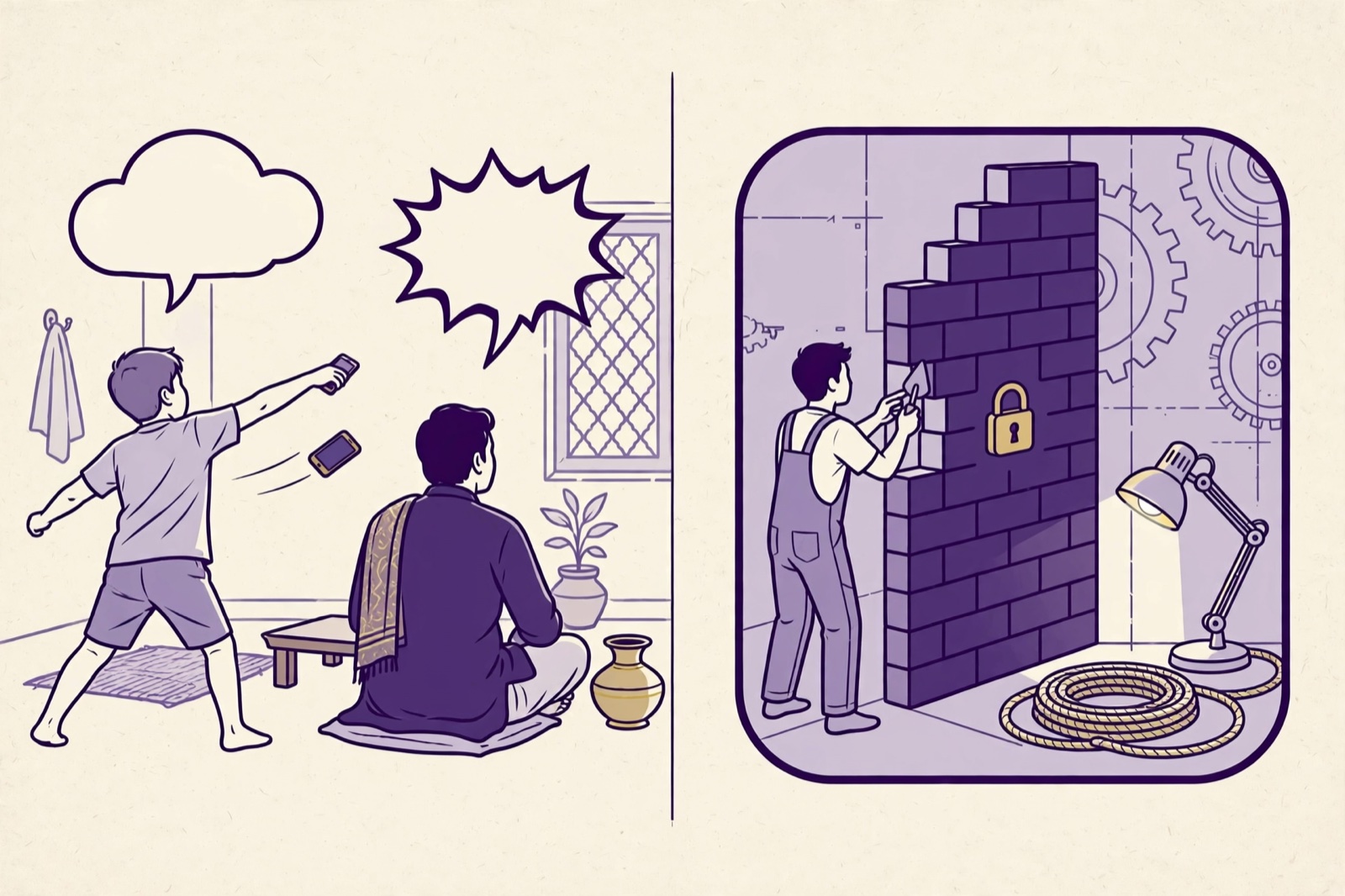
The Behavior Decoder
Translating what you see into what their nervous system is actually experiencing
"'Fine, take it! Take everything!' (Throws the phone at you, storms off)"
Your punishment just proved what I suspected: this isn't about learning, it's about who has power. Surrendering the phone is my way of refusing to play.
"Repeats the exact behaviour within days of the punishment ending"
I waited out the sentence. Nothing in me changed — I learned timing, not responsibility. Next time I'll just hide it better.
"'You just want to control everything!' (At a consequence that genuinely fits)"
Testing whether this is another power move in a fair costume. If I can reframe it as control, I don't have to face the part that's my fault.
Why Pain Doesn't Teach (and What Does)
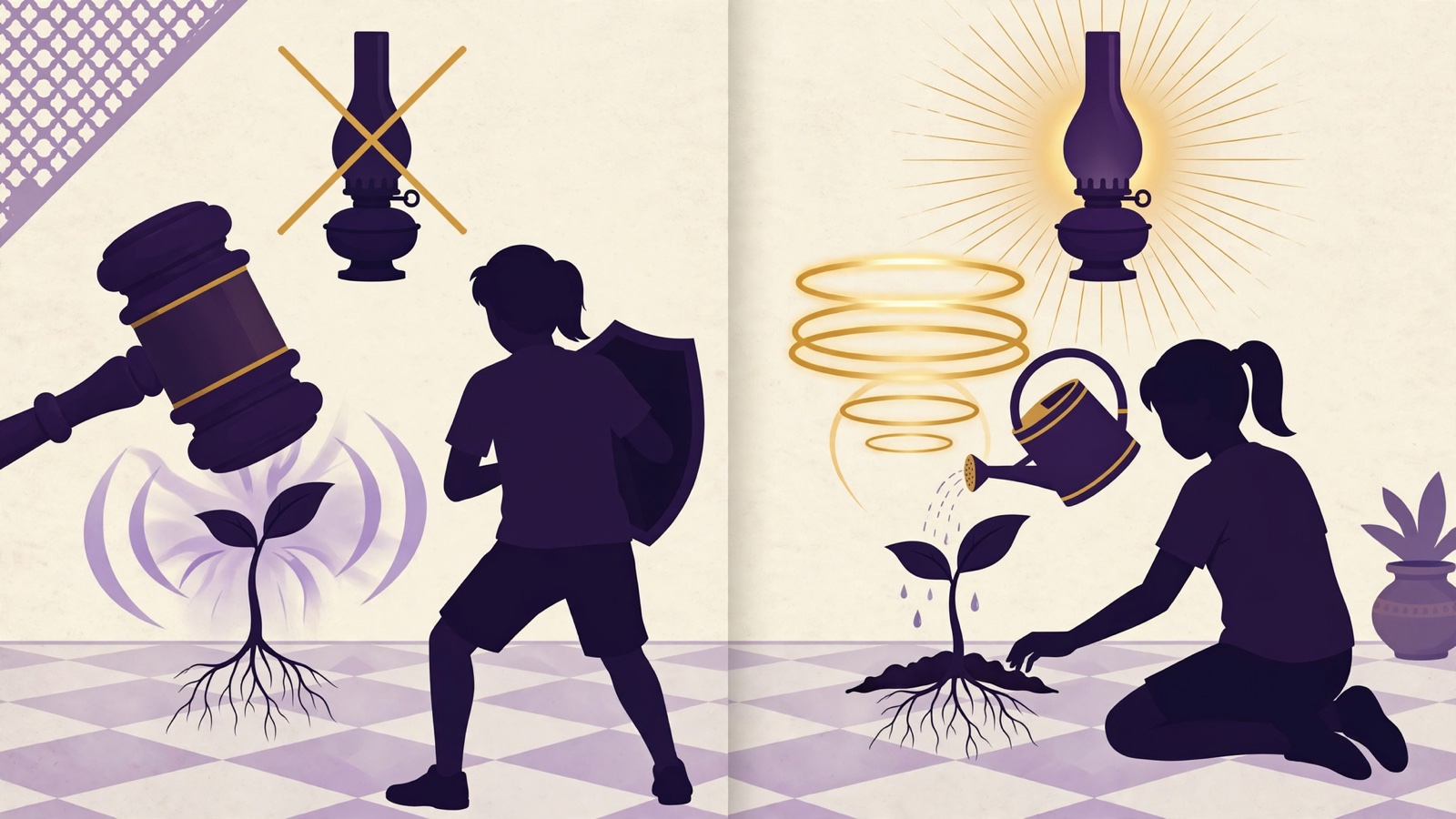
Punishment and learning run on different brain circuits. Pain, fear, and humiliation activate the threat system — which is brilliant at avoidance and terrible at understanding. A grounded teen learns to dodge the grounder, not to value punctuality. Learning, by contrast, needs the prefrontal cortex online: calm, connected, and able to link cause to effect. That's why the same consequence lands as education in one delivery and as warfare in another — the circuit that receives it decides what it is. Natural and logical consequences work because they keep the link visible: the effect belongs to the act, not to the parent's mood. The teen argues with reality instead of with you — and reality always wins without damaging the relationship.
Natural Instincts That Accidentally Make It Worse
Every caring parent falls into these traps out of love, fear, or exhaustion. Here is what happens inside their nervous system and how to shift:
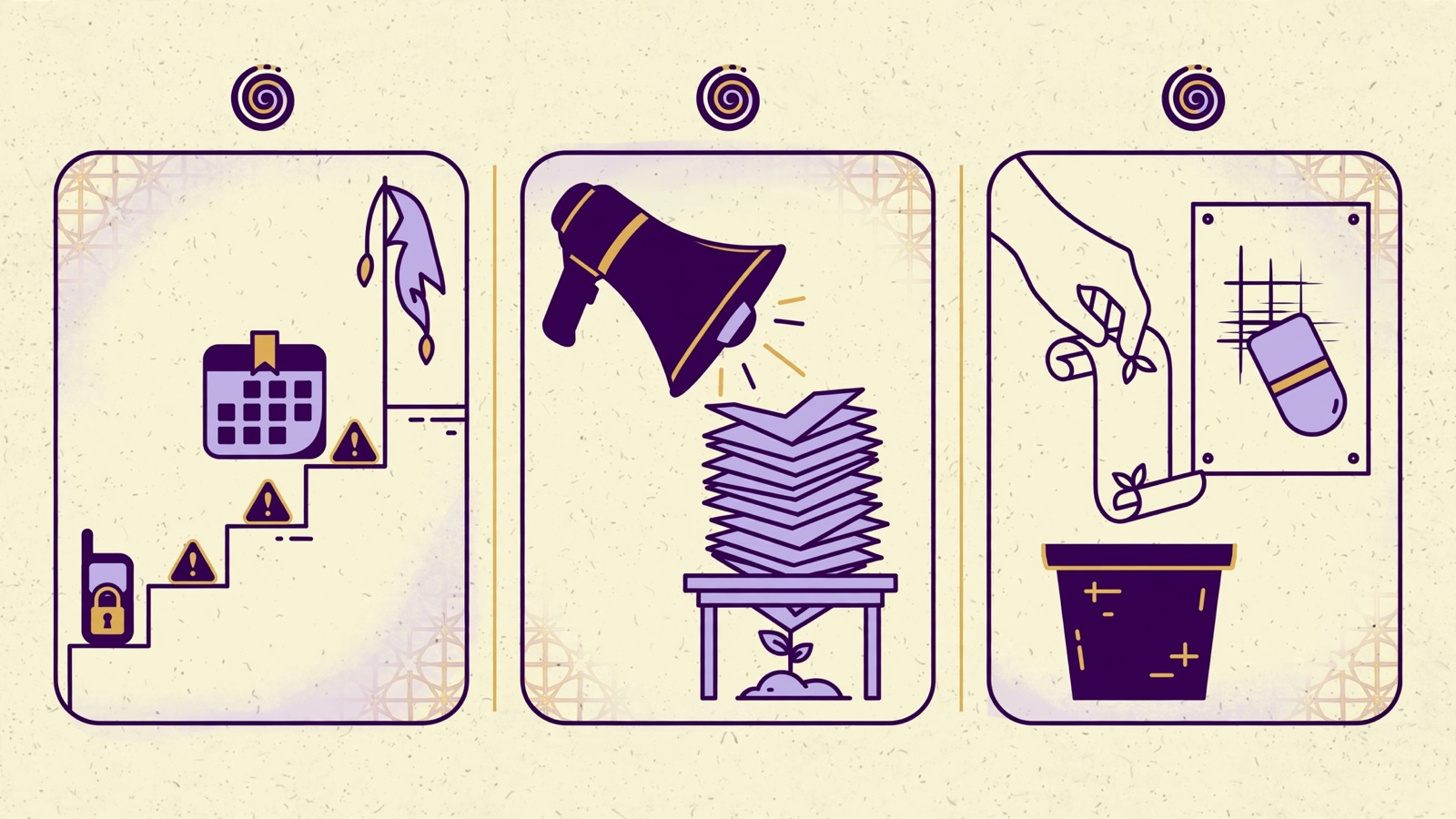
The Escalation Treadmill
When the behaviour repeats, double the sentence: two weeks becomes a month, a month becomes the term.
Teaches that your first consequences were bluffs and trains the teen in endurance and concealment. The house becomes an arms race with no learning on either side.
Shrink, don't grow: one small inevitable consequence, applied identically every time. Certainty teaches; severity merely stings.
The Courtroom Lecture
A full prosecution speech with the sentence — history of offences, character analysis, future predictions.
Floods the teen mid-receipt so the only thing encoded is your volume. The lesson drowns in the lecture.
Deliver consequences in under thirty seconds, then leave. Debrief tomorrow, briefly, when both brains are back online.
The Veto Collapse
Dropping a fair consequence at the first tears or the spouse's objection.
Teaches that persistence outlasts rules — protest becomes policy, and every future boundary gets stress-tested to destruction.
Set consequences you can actually sustain through protest. A small kept promise beats a grand abandoned threat every time.
The 4R Consequence Design
Every consequence you set must pass four tests — Related, Respectful, Reasonable, Revealed in advance.
Related: Tie the Effect to the Act
The consequence must be the act's own shadow, not your invention.
- Missed bus → he arranges and pays the auto (from pocket money), plus wakes 15 minutes earlier for a week — the morning owns the morning.
- Broken curfew → next two outings end an hour earlier — the evening disciplines the evening.
- Never: missed bus → no cricket Sunday. Unrelated pain is pure punishment wearing a uniform.
Respectful: No Shame in the Delivery
Same rule, said without the audience or the adjectives.
- Private, flat, brief: 'Bus missed. Auto is on you today — here's the advance from your allowance, logged.' No 'irresponsible', no witnesses.
- Never add humiliation garnish: no recounting to relatives, no social-media-adjacent shaming, no comparing with the neighbour's punctual son.
- Respect is what separates your consequence from mere revenge — and what keeps him listening next time.
Reasonable: Small Enough to Actually Happen
Design for certainty, not severity.
- Ask the sustainability question before announcing: 'Can I enforce this calmly for its full run, through protests, exams, and guests?' If no, shrink it.
- One week beats one month: short consequences get completed (learning lands); long ones get negotiated, forgotten, or silently dropped (learning dies).
- Write it down together where possible — the fridge beats memory for both sides.
Revealed in Advance: No Ambush Sentencing
The rule and its price are agreed BEFORE the offence, in a calm hour.
- Family meeting format: 'If X happens, Y follows — agreed?' Let him negotiate Y within reason; agreed consequences carry ten times the weight.
- When it happens: no speech, just the line — 'Bus missed — auto rule applies.' The pre-agreement does the heavy lifting.
- Review monthly: what worked, what's obsolete. Rules that evolve stay legitimate; fossil rules invite rebellion.
What to Say Tonight: Word-for-Word Scripts
Save these to your phone or keep them in mind for your next interaction.
"'Bus missed — auto rule applies. Here's the advance from your allowance, marked in the book. And the alarm moves fifteen minutes earlier starting tomorrow — your call on the tone, mine on the time.'"
Flat, brisk, already moving with your own day. No lecture, no audience.
Delivers all four Rs in twenty seconds: related (morning pays morning), respectful (no adjectives), reasonable (one auto ride, not a month), revealed (pre-agreed rule).
"'I'm not taking anything. The rule stands as agreed — that's it, no extras. When you're ready to talk about tomorrow's plan, I'm here.' Then disengage completely."
Completely unhooked — no counter-escalation, no rescuing the thrown phone theatrically.
Refuses the power-struggle frame entirely. Nothing to fight means nothing to win by fighting — and the door stays open for the actual conversation.
"'Here's my proposal for the bus rule — miss it, you fund the auto and shift the alarm earlier for a week. Too harsh? Too soft? Tell me what you'd set if you were me — I get final say, but I want your draft first.'"
Seated together, paper visible, genuinely listening before deciding.
Hands him authorship (autonomy need met), keeps your veto (authority intact), and converts future enforcement from ambush to contract collection.
Small, certain, linked — gravity never lectures.
Flat, brisk, already moving with your own day
"Related, respectful, reasonable, revealed in advance — or it isn't teaching, it's stinging."
The Underlying Psychological Mechanics
The Certainty Principle
Parents invert this instinctively — escalating size while letting consistency slide ('this time I'll let it go, but NEXT time...'). Flip the formula: shrink every consequence until you can guarantee it, then guarantee it like gravity. Gravity never lectures and never negotiates, which is exactly why nobody argues with it.
Punishment vs Consequence: The Kitchen Test
When Behaviour Is Communication
All Situations in Parenting Styles, Boundaries & Spousal Alignment
Connect Before You Direct (The Golden Rule)
Why barking commands triggers biological resistance, and how a 2-minute connection ritual unlocks voluntary cooperation.
Anger Isn't the Problem — Reactivity Is
How to harness anger constructively to hold firm boundaries without shouting, sarcasm, or silent treatments.
When Spouses Disagree: Ending Good Cop / Bad Cop
How divided parental rules cause teens to manipulate boundaries, and how to create a unified front behind closed doors.
Natural Consequences vs. Damaging Punishment
Why taking phones away creates hostility, and how to use non-damaging consequences that teach true accountability.
When In-Laws & Extended Family Interfere
Protecting household boundaries from generational guilt, comparisons, and unsolicited parenting advice.
Never Withdraw Love: Why the Silent Treatment Damages Adolescents
Cold wars feel like consequences to you and abandonment to them — stay present during the fight.
Don't Try to Fix Everything Tonight. Just Start Here.
Parenting shifts happen in tiny, consistent micro-moments. Choose the resource that fits your immediate need:
The 4R Consequence Planner (Printable)
A 1-page planner: the four tests, the auto-rule worked example, and the family-meeting agreement template.
Check Your Teen's Hidden Need Profile
Answer 6 quick questions to discover the exact root driver behind your teen's specific behavior patterns.
Boundaries Without Battles
Work 1-on-1 to reset your home environment, resolve chronic conflicts, and build lasting connection.
Cross-Chapter Recommended Guides
Ending Good Cop / Bad Cop: When You and Your Spouse Parent From Opposite Trenches
Good cop / bad cop isn't a style difference — it's a structural crack your teen arbitrages daily. Learn the closed-door alignment protocol: disagree in private, present one front, and retire both uniforms.
The Sarcasm Avalanche: Mocking, Eye-Rolls, and 'Whatever' at the Dinner Table
The eye-rolls, the mutters, the impressions of your voice — sarcasm is your teen defending status, not declaring war. Learn the redirect that ends the mocking while protecting both your dignity and his.