
Midnight Gaming, Phones & Sleep Battles
The Screen-Addicted Teen: Breaking the Dopamine Loop Without War
Why snatching their phone causes explosive meltdowns, how trillion-dollar algorithms hijack the adolescent reward system, and how to build collaborative digital guardrails that actually stick.
Nervous System Sanctuary
The physical and sensory retreat required to regulate after hours of cognitive and peer masking.
The Midnight Device Ambush
Snatching hardware mid-scroll triggers withdrawal rage and cements the dopamine loop.
"All devices sleep in the hallway dock at 10:15. Phones don't fight the algorithm at midnight — we do."
"It is 10:45 PM on a school night. The house is dark and quiet, except for the harsh blue glow illuminating your teenager's face beneath the bedsheets."
"Their thumb flicks rapidly—Reels, TikTok, Snap, Discord, Shorts. Their pupils are dilated, their breathing shallow, their posture rigid. They have been in this trance for four hours."
"You step into the room: 'I told you lights out an hour ago! Give me that phone right now!' You reach out your hand to take it."
"They jerk the phone away violently, pull their knees to their chest, and scream with terrifying intensity: 'DON'T TOUCH MY STUFF! Why are you always invading my privacy?! I hate you!'"
"You leave the room with the phone in your hand, but feeling defeated: Why does a 6-inch piece of glass have more influence over your child than you do? How did technology become the third parent in your home?"
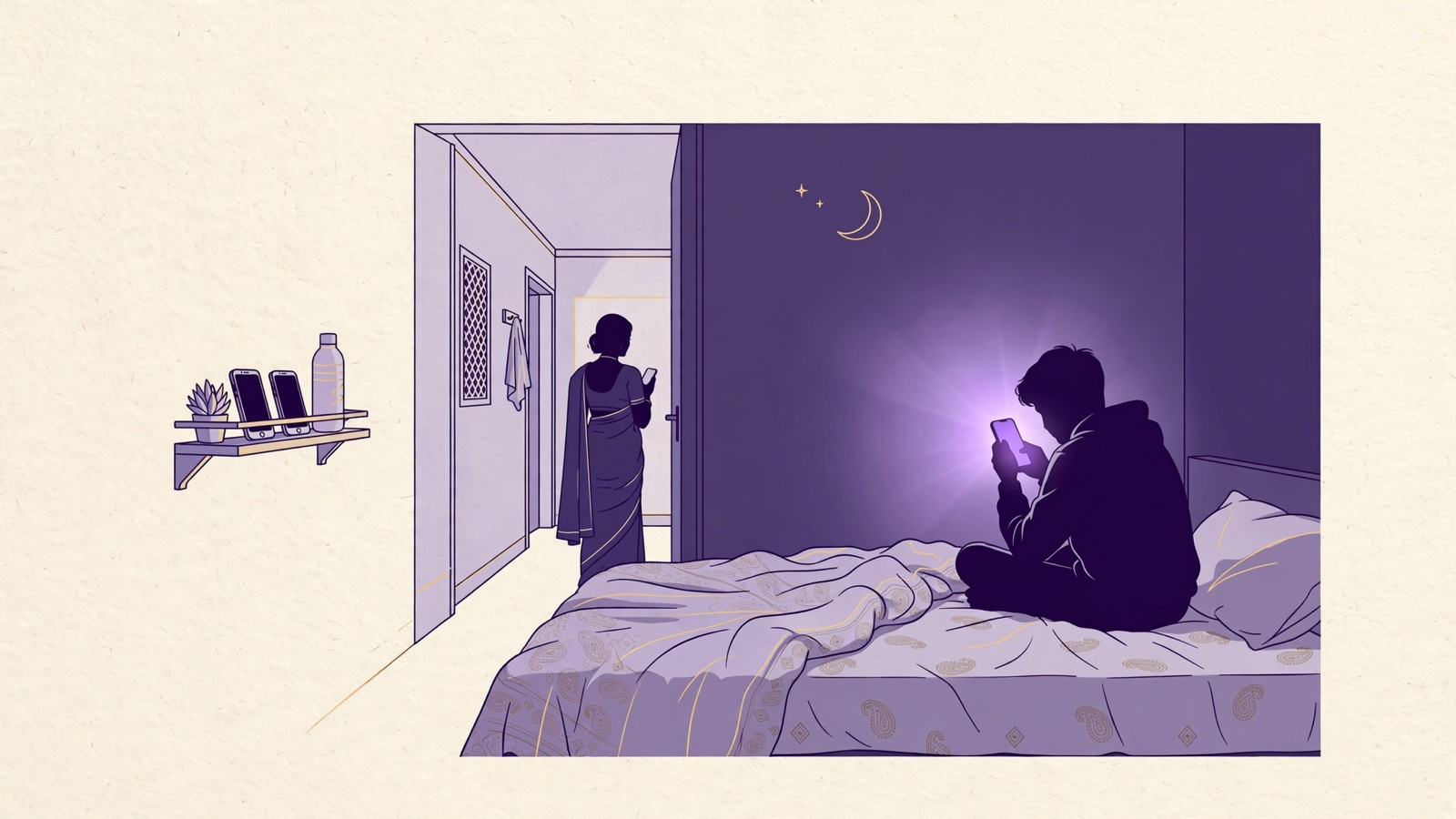
Your teenager is not broken, degenerate, or maliciously disobedient. Their developing brain is caught in an asymmetric psychological battle against the most sophisticated dopamine engineering in human history.
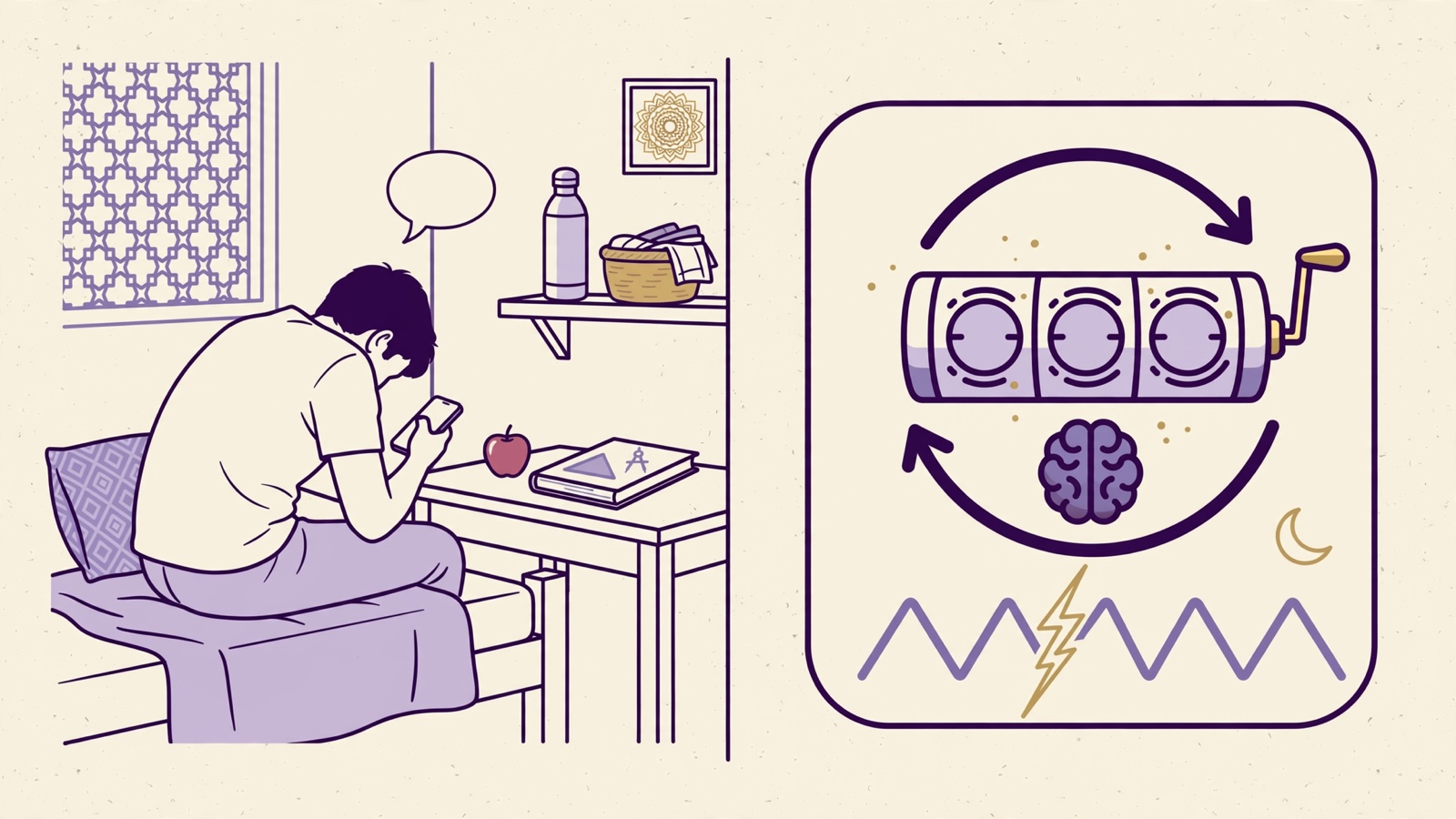
The Behavior Decoder
Translating what you see into what their nervous system is actually experiencing
"'All my friends are on group chat right now! If I log off, I miss everything!'"
Evolutionarily, adolescent survival depends on peer group integration. Missing out on the group dynamic registers in my nervous system as a primal threat of social exile.
"'I'm just listening to music while studying, leave me alone!'"
I intended to check one math formula, but an algorithm notification hooked me. I feel guilty about falling behind, but my prefrontal cortex lacks the braking power to close the app.
"Irritable grunts and glazed eyes when addressed while holding the screen."
My brain is in an acute hyper-dopaminergic flow state. An unexpected interruption causes an immediate dopamine drop, triggering acute neurological withdrawal and irritability.
Variable Reward Schedules & The Asymmetric Brain Race
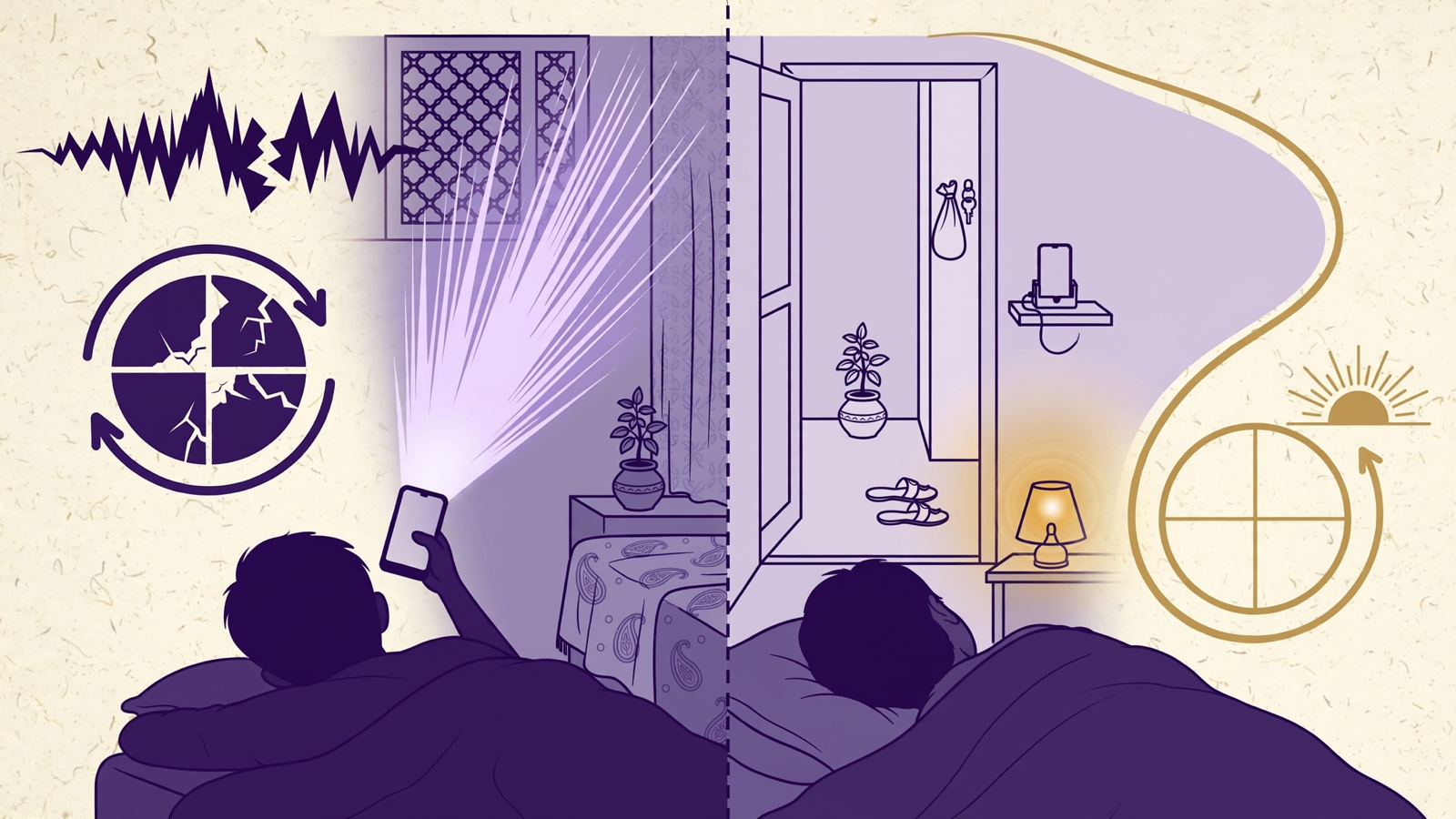
Short-form video feeds and messaging apps are explicitly built on B.F. Skinner's 'variable ratio reinforcement schedule'—the same mechanism that drives casino slot machines. Because the adolescent brain has a hyper-sensitized nucleus accumbens (the dopamine reward hub) combined with an immature prefrontal cortex (executive control), teenagers experience dopamine spikes up to three times stronger than adults in response to digital notifications. Furthermore, the blue-wavelength light emitted by OLED screens suppresses melatonin synthesis by up to 85%, completely disrupting adolescent circadian rhythms and causing chronic sleep deprivation.
Natural Instincts That Accidentally Make It Worse
Every caring parent falls into these traps out of love, fear, or exhaustion. Here is what happens inside their nervous system and how to shift:
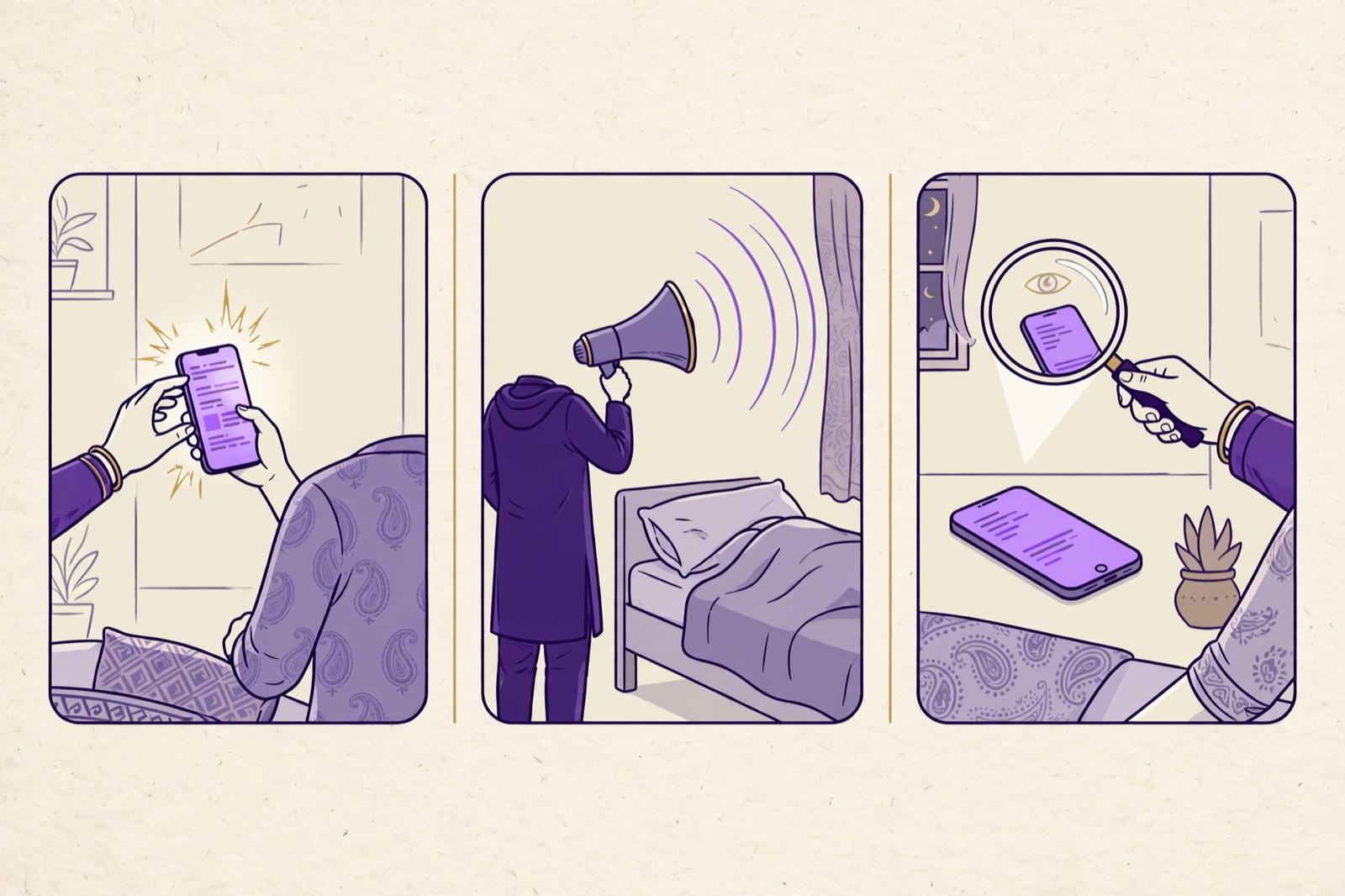
The Nuclear Router Confiscation
Snatching devices in fury or cutting the home WiFi without prior warning.
Triggers immediate sympathetic nervous system panic and acute hostility, driving the behavior further underground (burn phones, hidden hot-spots).
Shift from reactive punishment to structural, predictable routines established during calm daylight hours.
The 'All or Nothing' Tech Ban
Declaring total device bans for weeks on end as a disciplinary measure.
Deprives the teen of genuine academic tools and peer connection, ensuring that they learn zero digital self-regulation when the ban ends.
Create contextual friction (hallway charging docks, screen-free dining tables) rather than total prohibition.
Parental Hypocrisy
Demanding teens put their phones away while parents scroll social feeds or answer emails at the dinner table.
Destroys all moral authority. Adolescents have hypersensitive radar for parental double standards.
Practice family-wide digital hygiene where adult devices follow the exact same household docking rules.
The Collaborative Digital Guardrail Architecture
A sustainable 4-step framework to decouple your teen from screen addiction while preserving connection and trust.
The 10-Minute Yellow Light Transition
Give the dopamine system a predictable runway to wind down.
- Never snatch a phone or demand instantaneous compliance mid-scroll.
- Give a warm 10-minute warning: 'Hey, bedtime docking is in 10 minutes. Send your last snaps and finish your video.'
The Central Charging Sanctuary
Remove the temptation from the bedroom entirely.
- Phones do not sleep in bedrooms. Buy a physical alarm clock for their nightstand.
- All family devices—including parents' phones—are docked in the living room or kitchen charging station by 10:00 PM.
The Friction Principle
Make high-dopamine habits inconvenient.
- Enable grayscale mode on the phone after 8:00 PM. Removing saturated color blunts the pull of algorithmic feeds at bedtime.
- Keep social media apps off school study tablets.
Provide Real-World Dopamine Alternatives
You cannot eliminate a habit without replacing the underlying need.
- Teens use screens as a Sanctuary from school stress and social comparison.
- Provide high-sensory offline alternatives: sports, cooking together, hot showers, or 15 minutes of uninterrupted, judgment-free listening.
What to Say Tonight: Word-for-Word Scripts
Save these to your phone or keep them in mind for your next interaction.
"'I don't expect your brain to fight multi-billion-dollar algorithms at 11:30 PM when you're exhausted. Nobody can win that fight, not even adults. That's why our family rule is that all devices sleep in the kitchen station starting tonight so our brains can actually produce melatonin.'"
Compassionate, scientific, matter-of-fact. Non-accusatory.
Frames the technology company as the adversary rather than the teen. Uses biology and family solidarity rather than personal blame.
"'You have full right to privacy in your thoughts, your personal journal, and your quiet space. But an internet-connected device is an open door to the outside world. My responsibility as your parent is to keep that doorway safe, not to spy on you.'"
Calm, grounded, unhurried eye contact.
Clearly distinguishes healthy personal privacy from unsupervised digital vulnerability without shaming.
"'Hey, 10-minute buffer before docking. Wrap up your chat, say goodnight to your friends, and plug it in on the counter by 10:15.'"
Casual, collaborative reminder as you walk past.
Respects their tribal belonging need by giving them time to sign off gracefully with their peers.
Change the environment, not the child: docking beats lecturing.
Compassionate, scientific, matter-of-fact
"All devices sleep in the hallway dock at 10:15. Phones don't fight the algorithm at midnight — we do."
The Underlying Psychological Mechanics
The Evolutionary Trap of Digital Media
Today, through smartphones, adolescents are thrust into an artificial hyper-tribe of millions:
Every post is judged by likes, views, and comments (the quantifiably measured metric of tribal approval).
Every missed group chat message triggers the evolutionary terror of ostracization.
When you demand that your teen "just turn off the phone", their conscious mind might understand, but their ancient evolutionary nervous system screams that disconnection means social isolation.
The Grayscale Hack & Friction Architecture
Instead of demanding willpower, redesign the physical architecture:
Grayscale Mode: Modern UI design relies heavily on bright red notification badges and vibrant saturated colors to trigger dopamine anticipation. Switching their phone to black-and-white (Grayscale) turns a vibrant slot machine into a dry text screen.
The Hallway Rule: When the phone is in the bedroom, the barrier to checking it is zero. Moving the charger into the hallway adds physical friction that protects their restorative deep sleep cycles.
All Situations in Midnight Gaming, Phones & Sleep Battles
The Glued Smartphone (Infinite Scroll & Meltdowns)
8+ hours on Reels/Shorts/Snapchat, glazed eyes, and violent hostility whenever the device is unplugged.
Midnight Gaming & Academic Freeze
Playing Discord and PC games until 2 AM while board exam syllabus lies untouched (protective apathy).
The 3 AM Sleep Shift & Morning Hell
Physically unable to sleep before 2 AM, impossible to wake up, and chronic morning screaming matches.
The Family Phone & Digital Agreement
Phone rules designed once, enforced forever — without spyware, ambushes, or nightly renegotiation.
Don't Try to Fix Everything Tonight. Just Start Here.
Parenting shifts happen in tiny, consistent micro-moments. Choose the resource that fits your immediate need:
The Family Screen-Time Contract (Printable)
A collaborative family agreement establishing transparent boundaries, device docks, and curfew routines without spyware.
Evaluate Your Teen's Digital Sanctuary Score
Answer 6 quick questions to discover the exact root driver behind your teen's specific behavior patterns.
Screen Sanity
Work 1-on-1 to reset your home environment, resolve chronic conflicts, and build lasting connection.
Cross-Chapter Recommended Guides
The Silent Teen: How to Open the Door When You Only Get One-Word Answers
When your teenager retreats behind closed doors and responds in grunts, interrogating them only pushes them further away. Understand the Sensory Sanctuary driver and the exact side-by-side script that breaks the silence.
The Unmotivated Son: Why Teenage Boys Freeze Under Academic Pressure & Retreat into Gaming
When teenage boys face mounting board exam pressure and future uncertainty, they don't ask for help—they freeze, feign apathy, and play video games for 8 hours. Understand the Future Dread driver and how to rebuild his agency.
The Defiant Teen: De-escalating Explosive Arguments Without Power Struggles
When your teenager detonates over simple household requests, engaging in a screaming match guarantees defeat. Discover the Autonomy driver, the Drop-the-Rope technique, and verbatim de-escalation scripts.