
Explosive Anger, Defiance & Sarcasm
The 'That's Not My Job' Standoff: Chores, Mess, and Ending Free-Hotel Behaviour
Plates migrate, rooms womb-mess, and every request is met with 'why should I?' — the ownership gap behind free-hotel behaviour, and the household stake protocol that replaces the nightly nag.
Autonomy & Authentic Voice
The psychological need to experience self-determination, choice, and ownership over their time and decisions.
The Servant's Bell (Ask Number 11)
Repeated requests train him that asks one-through-ten are officially optional.
"You pick a category you own. I take it off my list. Defaults do the talking from week one."
"The dinner is over. His plate sits beside the sofa where he ate it, and he's back on the screen within ninety seconds."
"'Plate. Sink..Basic.' — fourth time tonight, fifth shape tonight. He sighs like you've unfair-ly ordered him to carry a fridge upstairs, drags the plate over, and makes sure you both see the martyrdom."
"His room, meanwhile, has reached biofilm stage: three uniforms somewhere under an archaeology of wrappers. And when you finally name all of it, the answer comes — flat, almost puzzled: 'Why should I? You're home all day anyway.'"
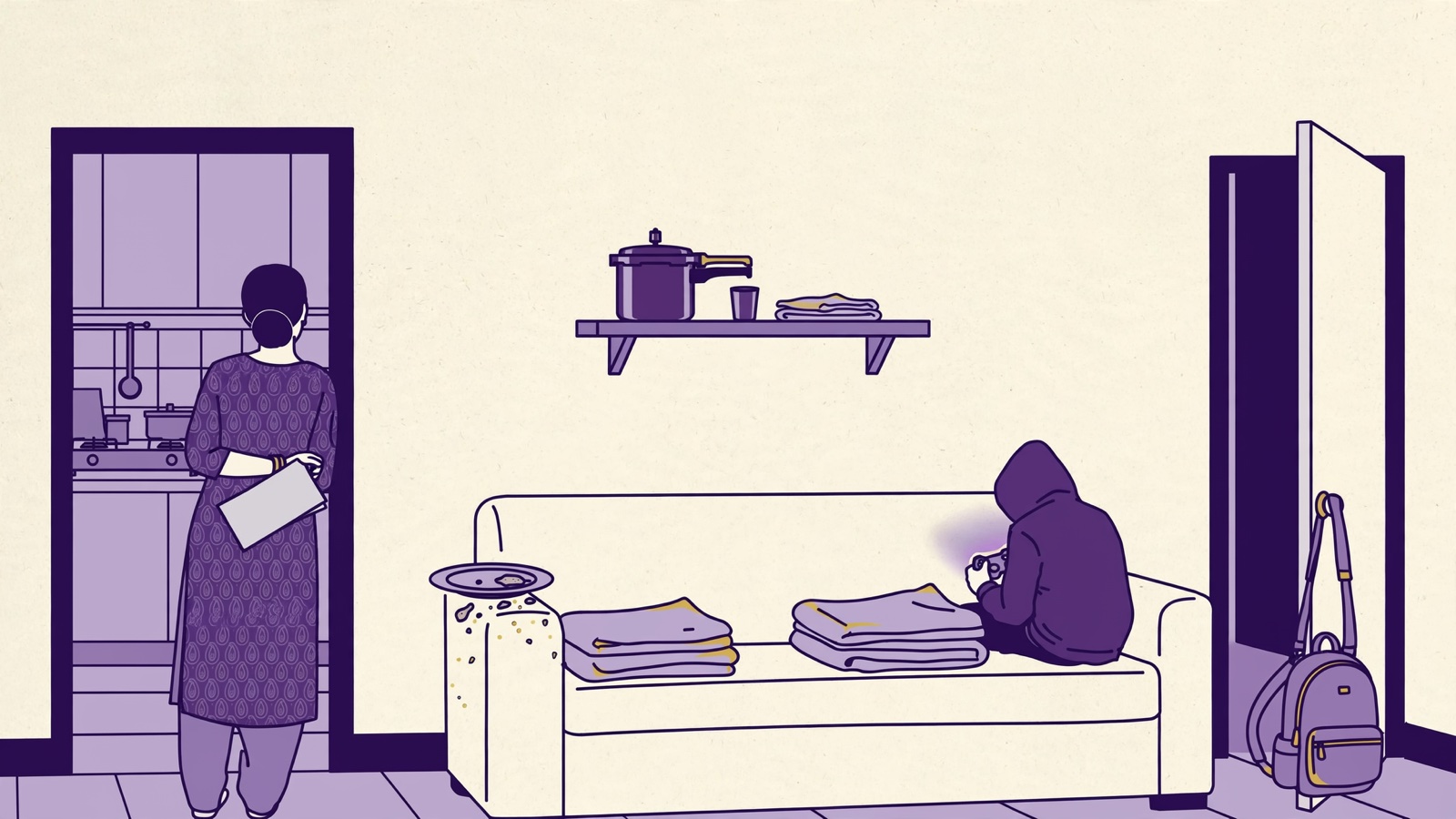
The martyrdom and the 'why should I' both feel like disrespect, but underneath they're the same gap: he has no experiencing of this house as his stake. Chores ordered at servants' volume make him a guest being managed, not a shareholder being counted. Ownership is teachable — and the nag isn't teaching it, no matter how often you repeat it.
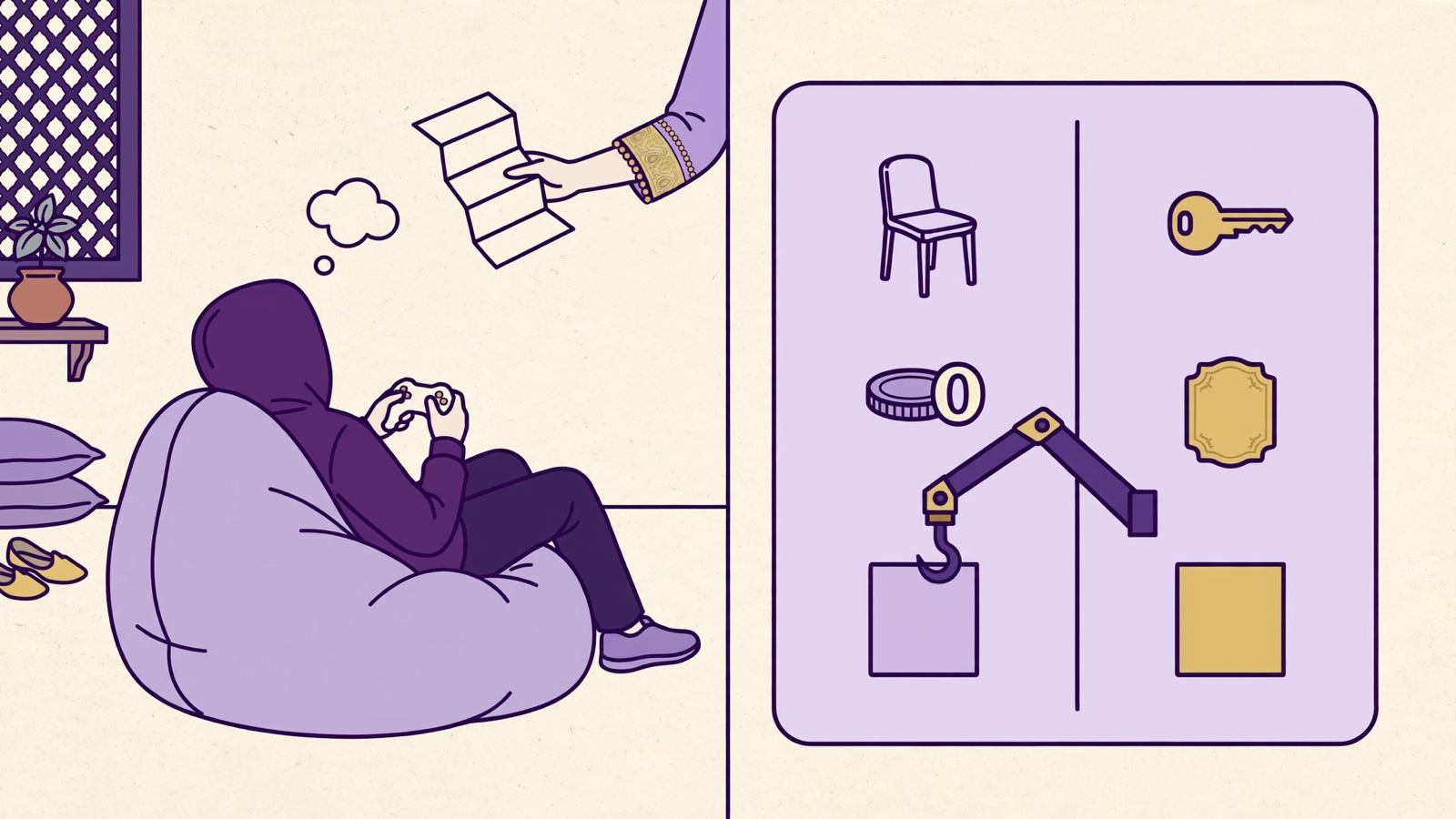
The Behavior Decoder
Translating what you see into what their nervous system is actually experiencing
"'Why should I? You're home all day anyway.'"
I don't experience this household as mine — it's your project I'm recruited into. Tasks ordered at me prove I'm staff, not stake.
"Does the chore with exaggerated suffering, then declares 'done'"
The payment I'm extracting for compliance is your frustration. If the task stays a battlefield, every show of suffering is a small victory.
"'I'll do it later.' (About the plates, the garbage, the room — 'later' is a country nobody visits)"
There is no system, only surveillance. Without a default moment, 'later' is infinite because nothing anchors it.
The Ownership Gap: Identity Economics of the Household
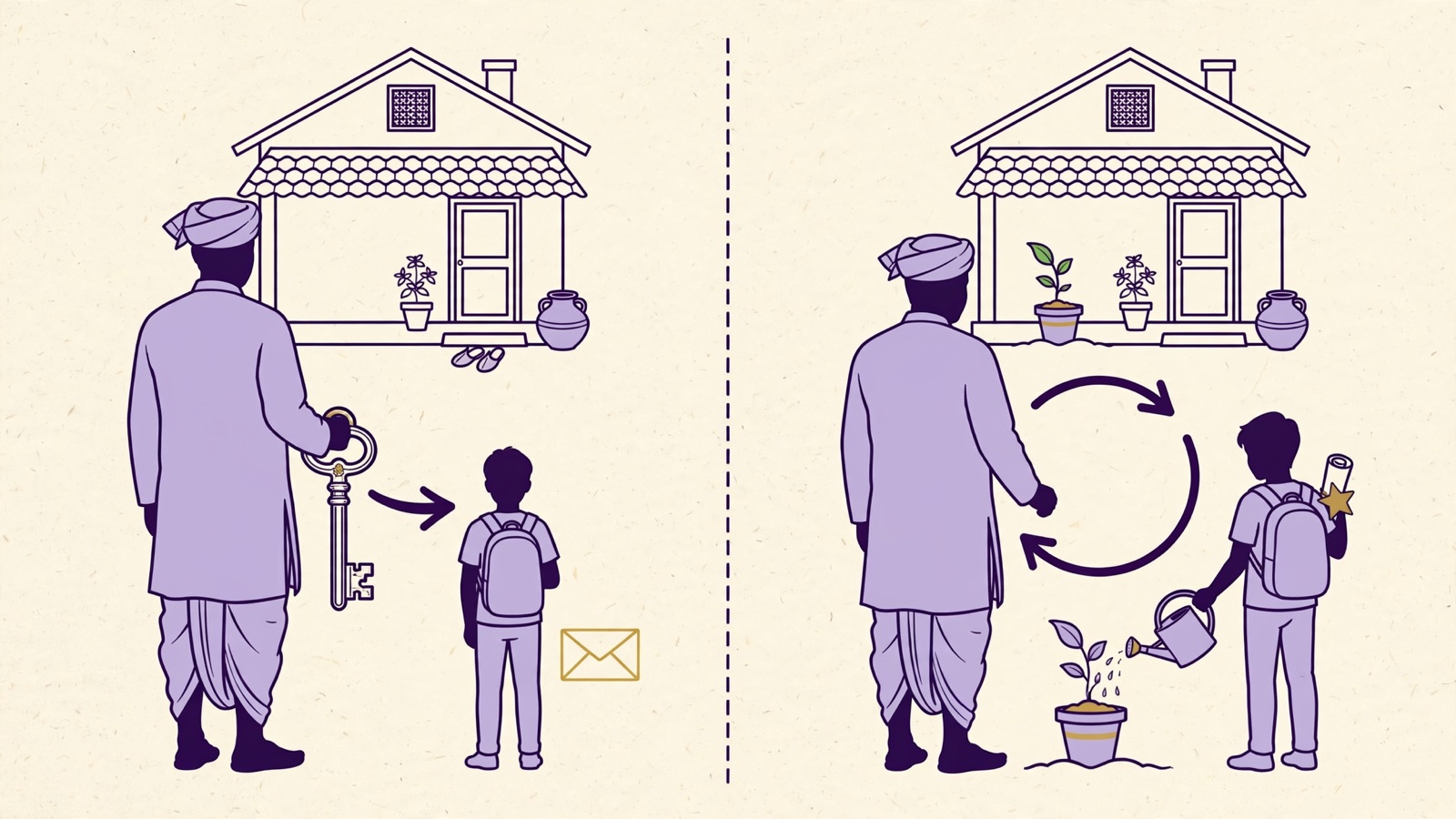
Adolescents are running a nightly audit: who benefits, who owns, what's my rank. Household tasks framed as orders configure the audit one way — the house is the parents' project, the teen is supervised labour, and compliance is a tax paid with suffering. The same tasks framed as ownership (a category he runs, by choice, with defaults) configure the audit the other way: stake, competence, visible contribution. This is not a trick; it's Self-Determination Theory operating at kitchen scale — autonomy breeds willingness, surveillance breeds counterwill. The system, not the reminder volume, decides whose version of 'why should I' wins.
Natural Instincts That Accidentally Make It Worse
Every caring parent falls into these traps out of love, fear, or exhaustion. Here is what happens inside their nervous system and how to shift:
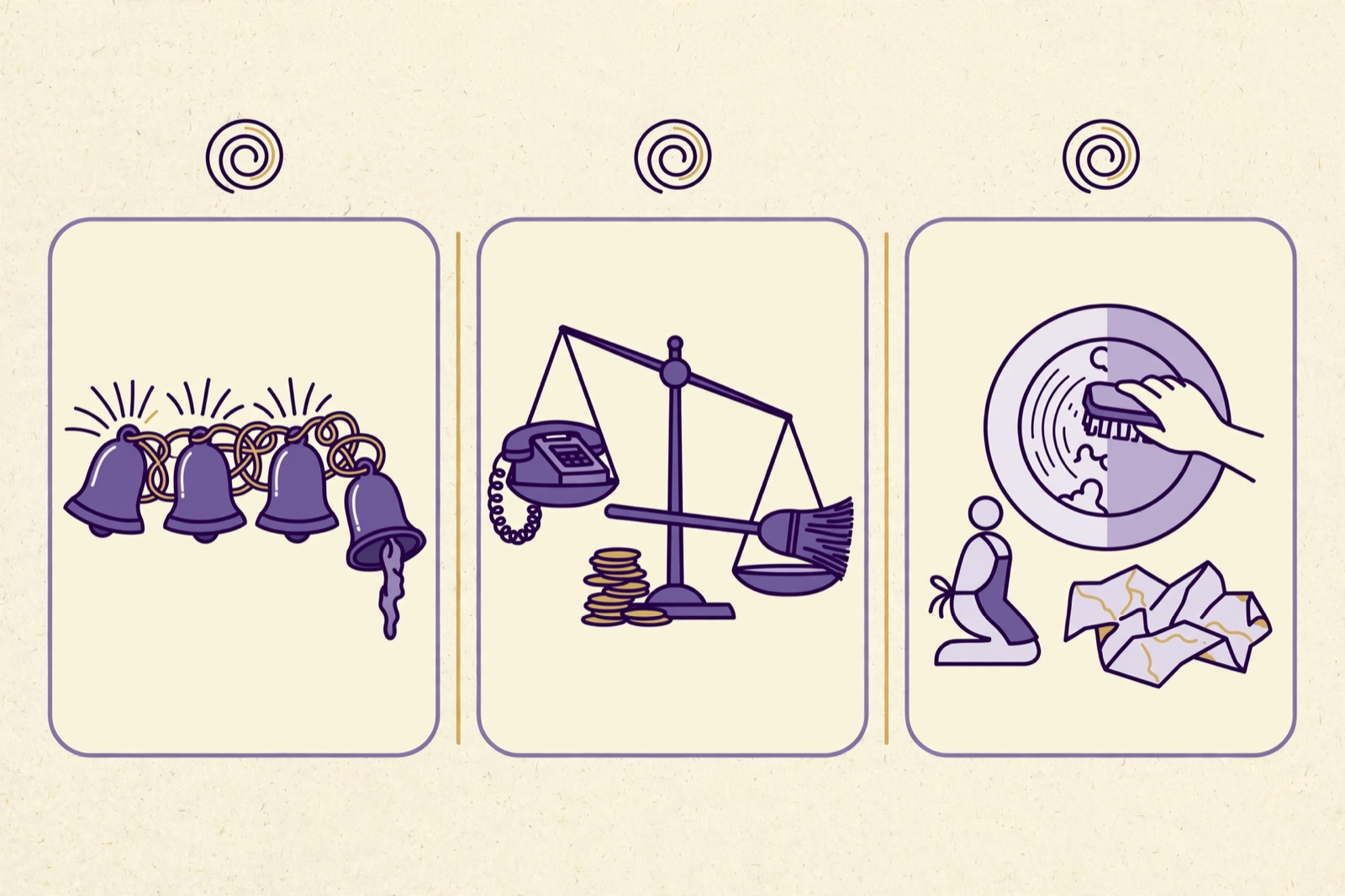
The Servant's Bell (Ask Number 11)
Repeat the request until compliance, escalating volume and sarcasm as you go.
Every repeat teaches that requests have no force until the eleventh one — so requests one through ten are officially optional. You're training exactly the behaviour you hate.
One ask, anchored to a default: 'Dishes after dinner is a family default — I'll say it once more tonight because the default is new, and after that the sink does the talking.'
The Screen-For-Dishes Barter War
'No WiFi until the kitchen is clean' — with revisions, loopholes, and midnight renegotiations.
Converts contribution into a currency war: he learns chores have a price and negotiates it nightly, and the house becomes a tariff office.
De-couple contribution from screen exchanges. Defaults happen because we live here; screens happen on their own schedule. Two systems, one wall between.
The Anxious Redo
'Not like that — like THIS' with a sigh, taking the cloth from his hand mid-task.
Teaches that his best effort is never correct and the real system is you doing it unhappily. The chore now belongs to your incompetence reviews, so he stops offering.
Teach once, hands-on, then accept the achieved standard. Save perfection tutoring for the weekly fifteen minutes — not at the sink on a Tuesday.
The Household Stake Protocol (Shareholder, Not Staff)
Four moves that convert the free-hotel audit into an ownership audit — category choice, defaults, competence, visible stakes.
The Ten-Minute Household Council
One calm meeting: the house stops being your project and becomes his portfolio.
- Frame it honestly: 'This house runs on everyone's labour, including mine and including yours. I've been running your recruitment badly — tonight we fix the system.'
- He chooses one owned category (dinner cleanup, his own laundry, garbage rounds, plant care) — choice is non-negotiable; you may craft the menu, but he picks the dish.
- Every member picks at least one category, adults included, on the same visible list. The family labour sheet on the fridge is the single source of truth — no verbal re-litigation.
Install Defaults, Kill the Bell
Anchor each category to a fixed trigger so reminders retire.
- 'Dinner ends → dishes in sink before screens. Sunday after dinner → his laundry. Wednesday and Saturday → garbage rounds.' Written, photographed, on the fridge.
- You say the default once. After that, the system speaks: untouched sink at screen-o'clock means screens wait — announced once, without commentary, like weather.
- Re-anchor announcements only when the category changes or a genuine week collapses — not nightly.
Teach the Task Once (Competence Debt, Dignity Memory)
Most 'refusal' is invisible incompetence with dignified cover.
- One fifteen-minute teaching session per category, hands-on, his hands doing it, yours narrating — the separation between 'won't' and 'can't Often lives here.
- Then accept the achieved standard. Over-the-shoulder perfection reviews at the sink re-parent him back into staff mode.
- A weekly fifteen-minute tune-up is fine. Daily 'not like that' commentary is poison — bank it, deliver it Sunday.
Make the Stake Visible and the Credit Real
Ownership pays in recognition and consequence, not small cash.
- Name his contribution where it lands: 'Your dinner cleanup ran the kitchen tonight — Thursday's sit-down was possible because of it.' Family labour stays visible.
- Connect stakes upward: the laundry category buys him out of your laundry nagging forever — his category, his call, his growing relief.
- When a default collapses repeatedly for two weeks, don't punish: re-contract the category at the next council. Systems fail; councils fix them.
What to Say Tonight: Word-for-Word Scripts
Save these to your phone or keep them in mind for your next interaction.
"'You're right that this house doesn't run itself — that's actually the point. It runs on everyone's labour: mine, your father's, and yours. Tonight we fix the system: you pick a category you'll own, I'll take it off my list entirely. Pick one — dinner cleanup, your laundry, or garbage rounds.'"
Level, unhurried, at the dining table with paper. Not mid-battle.
Concedes the (half-true) claim to dissolve the fight, then relocates the request from surveillance to ownership — an offer, not an order.
"(Say nothing. Nod. Continue your evening.)"
Relaxed and uninterested in the theatre. Zero commentary.
Suffering is a payment system seeking your frustration as currency. When the currency is refused nightly, the theatre closes for lack of audience.
"'Later is off the menu — it was never a moment. Dishes happen after dinner, like teeth. I've said the default once tonight; after week one the sink does the talking, not me.'"
Calm, one sentence, no volume rise. Then actually disengage.
Kills the infinite 'later' by yoking the chore to an unarguable daily anchor, and pre-announces your retirement from the reminder business.
Chores ordered are taxes; chores owned are stakes.
Level, unhurried, at the dining table with paper
"You pick a category you own. I take it off my list. Defaults do the talking from week one."
The Underlying Psychological Mechanics
Why 'Free Hotel' Is an Audit Problem, Not a Character One
Shift the configuration and the audit flips: owned category, chosen dish, fixed default, visible credit. Now the bank pays willingness with autonomy and competence. The chores barely change; the frame does all the work. This is Self-Determination Theory at kitchen plumbing level — and it's why nineteen speeches about gratitude produce less than one ten-minute council.
The Difference Between 'Won't' and 'Can't'
The fifteen-minute hands-on teaching session (his hands, your narration) quietly resolves most 'won't'. The failure mode is teaching while impatiently doing it yourself, or auditing his first week like an inspection. Teach once, tolerate the reachable standard, schedule tune-ups weekly.
What Not to Pay For
All Situations in Explosive Anger, Defiance & Sarcasm
The Sudden Detonation (Explosive Shouting & Slams)
0 to 100 in 3 seconds: When a simple household request detonates into screaming, wall-punching, or slammed doors.
Sarcasm, Mocking & Eye-Rolling
Sneering comments, muttering under their breath, and challenging parental authority with contempt.
Swearing & Verbal Boundary Violations
What to do when foul language, insults, and name-calling enter family disagreements.
The 'That's Not My Job' Standoff
Treating home like a free hotel, refusing chores, and leaving messes for parents to clean up.
Don't Try to Fix Everything Tonight. Just Start Here.
Parenting shifts happen in tiny, consistent micro-moments. Choose the resource that fits your immediate need:
The Household Stake Contract (Printable)
A 1-page family council sheet — category ownership menu, default anchors, and the weekly tune-up slot.
Check Your Teen's Autonomy Driver Score
Answer 6 quick questions to discover the exact root driver behind your teen's specific behavior patterns.
Boundaries Without Battles
Work 1-on-1 to reset your home environment, resolve chronic conflicts, and build lasting connection.
Cross-Chapter Recommended Guides
The Defiant Teen: De-escalating Explosive Arguments Without Power Struggles
When your teenager detonates over simple household requests, engaging in a screaming match guarantees defeat. Discover the Autonomy driver, the Drop-the-Rope technique, and verbatim de-escalation scripts.
Connect Before You Direct: The Golden Rule of Adolescent Cooperation
Commands without connection feel like threats to an adolescent's developing autonomy. Discover the 2-minute rapport protocol that ends morning screaming matches and evening homework battles.