
Stress Management & Sleep Reset Worksheets
CBT stimulus control, worry windows, and somatic resets for overwhelmed students.
Clinical Principle: Contain runaway rumination and restore circadian balance.
Academic stress frequently leaks into bedtime, triggering chronic sleeplessness and burnout. These worksheets combine CBT stimulus control with somatic regulation to park worries safely until daytime.
Which Worksheet Do You Need Right Now?
Match your immediate academic or emotional friction point to the corresponding clinical tool.
| Immediate Situation / Challenge | Recommended Tool | Time | Core Mechanism | Action |
|---|---|---|---|---|
| Racing mind at bedtime with intrusive worries about school, marks, and deadlines | Late-Night Worry Window & Brain Dump Sheet | 12 min | Applies CBT stimulus control to park nocturnal worries into a scheduled daytime window. | View |
| Sudden heart pounding, trembling, or panic during mock exams or class tests | Exam Panic & Worry Reset Sheet | 10 min | Interrupts catastrophic spiraling through evidence checks and the physiological sigh. | View |
All Worksheets in This Collection
Download the publication-grade A4 vector PDF or open interactive step-by-step instructions.
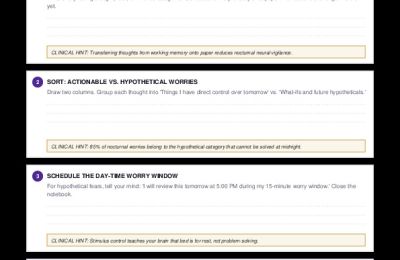
Late-Night Worry Window & Brain Dump Sheet
CBT stimulus control for teenagers caught in nocturnal rumination loops.
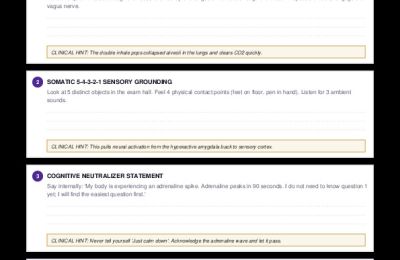
Exam Panic & Worry Reset Sheet
Break the catastrophizing spiral before mock exams and board papers.
How to Sequence This Toolkit
These worksheets are designed to be used sequentially as a coherent intervention, rather than isolated sheets.
Offload Racing Bedtime Thoughts
Use the Late-Night Worry Window 90 minutes before sleep to offload all thoughts onto paper and sort actionable tasks from hypothetical fears.
Ground Nervous System During Daytime Pressure
Use the Exam Panic & Worry Reset Sheet for daytime somatic grounding when study stress peaks before tests or assignment submissions.
Understanding the Cognitive Challenge
What Students & Families Need to Know
Chronic academic stress in secondary and senior school students frequently induces autonomic nervous system hyperarousal. When daylight hours are filled with continuous coaching, school, and homework demands, the quiet of bedtime becomes the only space where unaddressed anxiety surfaces. This triggers sleep-onset insomnia, with students tossing and turning for hours in rumination loops.
Why Traditional Planners & Advice Fail
Trying to 'force' sleep or listening to generic sleep tracks while lying in bed often triggers secondary sleep anxiety. The harder an overstressed student tries to sleep, the more vigilant their brain becomes.
The Behavioral Scaffolding Mechanism
Stimulus control and daytime cognitive containment (the Scheduled Worry Window) decouple bedtime from problem-solving. Somatic bridges (physiological sigh, progressive muscle relaxation) down-regulate the sympathetic nervous system and stimulate vagal tone, creating the physiological prerequisites for restorative sleep.
Guidelines for Parents & Educators
How to introduce these tools collaboratively without triggering power struggles or resistance.
What Helps (Supportive Practices)
- •Establish a household wind-down ritual 45 minutes before sleep with dim lighting.
- •Encourage writing down worries rather than keeping them bottled up.
- •Ensure bedtime happens at consistent hours even on weekends to protect circadian rhythm.
What to Avoid (Common Pitfalls)
- •Do not allow smartphone or tablet screens in bed, as blue light halts melatonin production.
- •Avoid discussing difficult academic topics or test results within 1 hour of bedtime.
Common Questions About These Stress Management & Sleep Reset Worksheets
What is a 'Worry Window' and how does it work?
A Worry Window is a scheduled 15-minute daytime period (e.g., 5:30 PM to 5:45 PM) dedicated to reviewing worries written down the night before. If a worry pops up at night, tell yourself: 'I will address this tomorrow at 5:30 PM.' Over time, your brain learns that nighttime is strictly reserved for rest.
Stress & Sleep Rhythm Screener
Evaluate your autonomic stress load, sleep disruption patterns, and burnout vulnerability with our brief clinical stress check.
Explore Other Curated Topic Hubs
ADHD & Executive Functioning Worksheets
Printable planners, dopamine menus, and micro-sprint canvases designed for neurodivergent focus.
Anxiety, Exam Panic & Social Confidence Worksheets
CBT cognitive restructuring, panic resets, and exposure hierarchy ladders for teens and students.
Parent-Teen Communication & Boundary Worksheets
Co-created agreements, conflict repair scripts, and emotional validation guides for families.
Stream Selection & Career Decision Worksheets
Objective decision matrices and cognitive stamina audits for Class 10 and 12 students.