
Anxiety, Exam Panic & Social Confidence Worksheets
CBT cognitive restructuring, panic resets, and exposure hierarchy ladders for teens and students.
Clinical Principle: Interrupt cognitive distortions & calm the sympathetic nervous system.
Anxiety triggers catastrophic 'what-if' loops and physiological fight-or-flight arousal. These structured CBT and somatic worksheets provide concrete grounding exercises to test evidence, restore executive clarity, and safely face fears.
Which Worksheet Do You Need Right Now?
Match your immediate academic or emotional friction point to the corresponding clinical tool.
| Immediate Situation / Challenge | Recommended Tool | Time | Core Mechanism | Action |
|---|---|---|---|---|
| Sudden cognitive blanking and panic before mock exams or coaching tests | Exam Panic & Worry Reset Sheet | 10 min | Isolates the catastrophic distortion, examines real evidence, and resets breathing. | View |
| Lying awake at 1 AM ruminating over tomorrow's deadlines and exam results | Late-Night Worry Window & Brain Dump Sheet | 12 min | Applies CBT stimulus control to park nocturnal worries into a scheduled daytime window. | View |
| Terrified of speaking up in class, asking doubts, or giving school presentations | Social Courage & Exposure Hierarchy Ladder | 15 min | Builds a 5-rung graduated exposure ladder with Subjective Units of Distress (SUDs). | View |
All Worksheets in This Collection
Download the publication-grade A4 vector PDF or open interactive step-by-step instructions.
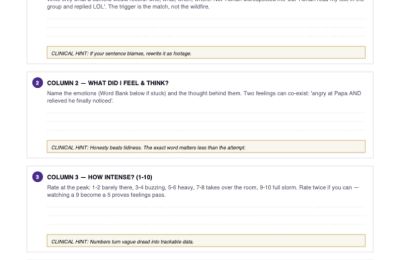
Emotion Awareness Log: Trigger → Feeling → Intensity → Response
A 4-column teen journal for catching what happened, what you felt, how big it got, and what you did.
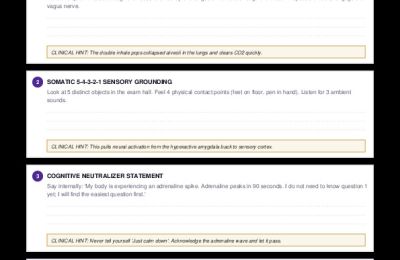
Exam Panic & Worry Reset Sheet
Break the catastrophizing spiral before mock exams and board papers.
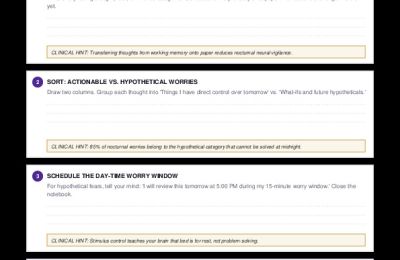
Late-Night Worry Window & Brain Dump Sheet
CBT stimulus control for teenagers caught in nocturnal rumination loops.
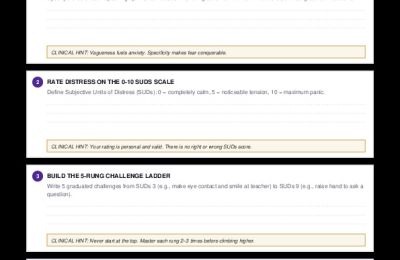
Social Courage & Exposure Hierarchy Ladder
Systematic desensitization ladder for social hesitation, group projects, and presentations.
How to Sequence This Toolkit
These worksheets are designed to be used sequentially as a coherent intervention, rather than isolated sheets.
Disrupt Acute Catastrophic Spirals
Use the Exam Panic & Worry Reset Sheet during study sessions when intrusive thoughts ('I will blank out and fail') cause freeze or trembling.
Contain Bedtime Overthinking Loops
Use the Late-Night Worry Window 90 minutes before sleep to offload racing thoughts and decouple your bed from cognitive rumination.
Build Systematic Social Confidence
Work through the Social Courage Ladder over 2 to 4 weeks to progressively overcome classroom hesitation, doubt-asking anxiety, and public speaking fear.
Understanding the Cognitive Challenge
What Students & Families Need to Know
Adolescent anxiety is driven by cognitive distortions (catastrophizing, mind-reading, emotional reasoning) coupled with an overactivated sympathetic nervous system. In high-pressure academic settings (mock board exams, competitive entrance test coaching, viva presentations), the amygdala misinterprets academic risk as existential danger, resulting in rapid heartbeat, trembling, and the dreaded experience of sudden memory blackout.
Why Traditional Planners & Advice Fail
Telling an anxious teenager to 'just calm down' or 'think positive' is neurobiologically ineffective. When cortisol and adrenaline flood the prefrontal cortex, logical reasoning circuits are down-regulated. Without a structured external paper tool to slow the catastrophic spiral, the student remains trapped in physiological panic.
The Behavioral Scaffolding Mechanism
Cognitive Behavioral Therapy (CBT) and somatic regulation work synergistically. By externalizing catastrophic predictions onto paper, students achieve metacognitive distance. Pairing rigorous evidence-testing with the two-breath physiological sigh restores autonomic equilibrium, allowing memory retrieval to come back online.
Guidelines for Parents & Educators
How to introduce these tools collaboratively without triggering power struggles or resistance.
What Helps (Supportive Practices)
- •Validate their physiological distress before presenting logic ('I see how tense your shoulders are; let's reset together').
- •Encourage timed mock practice in realistic settings to build somatic habituation to exam pressure.
- •Model nervous system calm; teenagers subconsciously mirror parent anxiety during exam seasons.
What to Avoid (Common Pitfalls)
- •Do not dismiss their fears with 'It's only an exam, don't worry'—invalidation amplifies distress.
- •Do not permit complete avoidance of tests, as avoidance reinforces the brain's fear loop.
- •Avoid interrogating about marks and percentile ranks the moment they exit the exam hall.
Common Questions About These Anxiety, Exam Panic & Social Confidence Worksheets
Can students use the Exam Panic Reset technique inside the examination hall?
Yes. Students practice the 4-step sequence on paper during preparation until it becomes an automatic mental reflex. Inside the exam hall, they perform the double-inhalation physiological sigh and cognitive reset mentally in under 60 seconds.
How does the Worry Window sheet cure sleep-onset insomnia?
It uses CBT stimulus control. Lying in bed thinking trains the brain to associate the mattress with mental arousal. Writing down worries at a desk and postponing reflection to an agreed daytime hour allows the bed to return to an uncompromised cue for sleep.
Adolescent Mood & Anxiety Screening (GAD-7 & PHQ-9 Grounded)
A confidential, clinically normed self-report screening to evaluate whether exam worry has crossed into clinical generalized or social anxiety.
Explore Other Curated Topic Hubs
ADHD & Executive Functioning Worksheets
Printable planners, dopamine menus, and micro-sprint canvases designed for neurodivergent focus.
Parent-Teen Communication & Boundary Worksheets
Co-created agreements, conflict repair scripts, and emotional validation guides for families.
Stream Selection & Career Decision Worksheets
Objective decision matrices and cognitive stamina audits for Class 10 and 12 students.
Stress Management & Sleep Reset Worksheets
CBT stimulus control, worry windows, and somatic resets for overwhelmed students.