
Board Exams, Academic Pressure & ADHD
The Scattered Teen: ADHD, Executive Lag, and Why Nagging About Homework Never Works
Lost worksheets, chronic lateness, the daily 'I forgot', and 45 minutes to start a 10-minute task — the executive-function lag behind 'lazy', and the scaffolding that works when reminders don't.
Autonomy & Authentic Voice
The psychological need to experience self-determination, choice, and ownership over their time and decisions.
The 4,001st Reminder
Verbal prompts train waiting-for-the-prompt, never self-starting — and corrode the relationship at volume.
"Check the card. First line. Fifteen-minute timer. I'm not saying the homework word again."
"It's 8:30 PM. Maths homework still isn't started, and the worksheet is — somewhere. Kitchen table? Under the mattress? In the tuition bag from Monday?"
"When he finally sits, it takes forty-five minutes of sharpening pencils, refilling bottles, one earbud in, and a detour to the fridge before ten minutes of actual solving happens. At 10:15 you lose your temper — again — and he explodes: 'STOP NAGGING! I WAS DOING IT!'"
"Bedtime leaves the kitchen wrecked, the worksheet half-done, and both of you exhausted after a fight you have now had roughly two hundred times. Tomorrow it repeats, because the nag has worked exactly zero times out of two hundred."
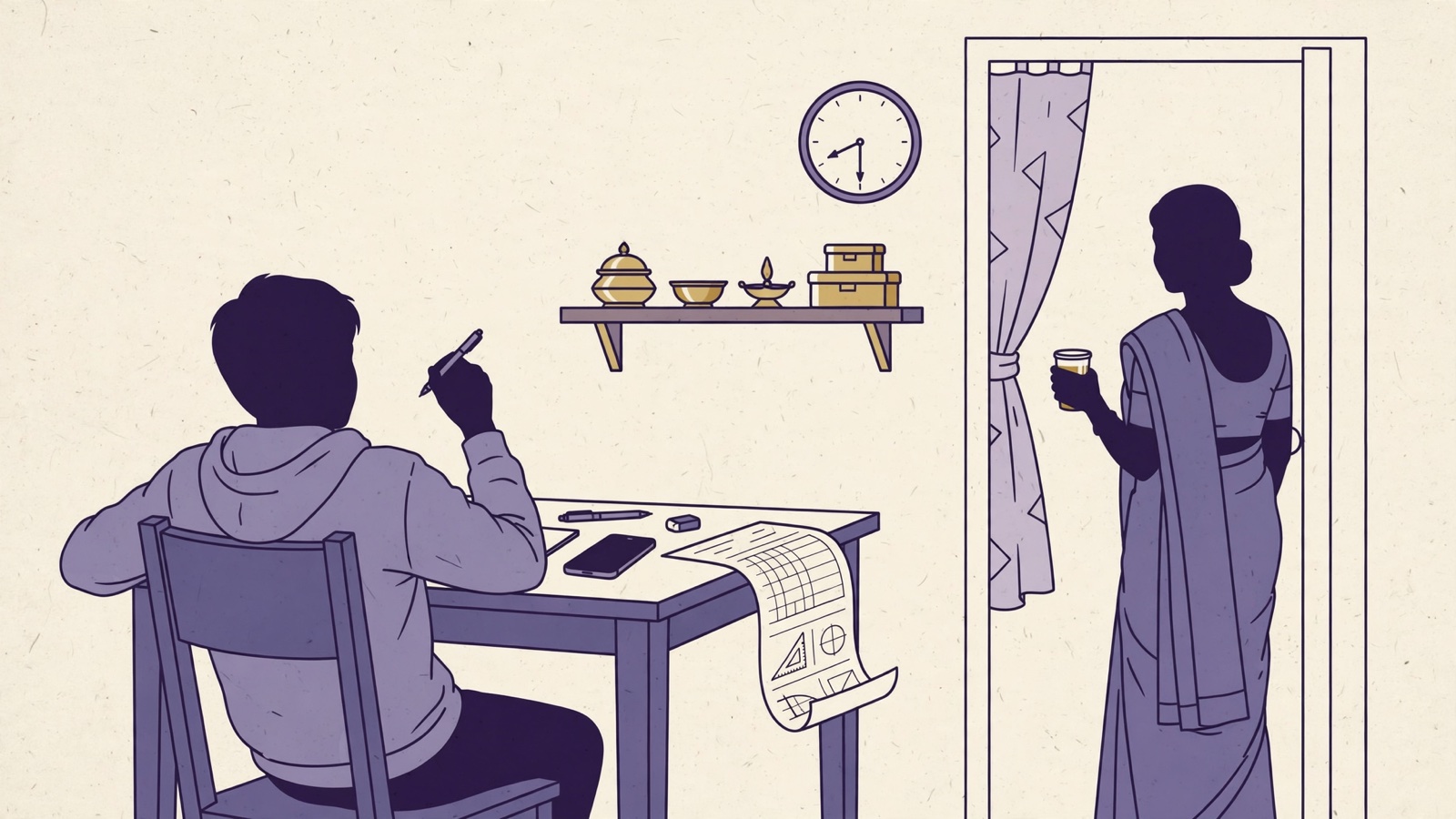
What you're seeing is not defiance, weak character, or bad parenting — it's an executive-function lag. Starting, switching, holding a plan, and resisting a dopamine snack are brain skills on a later timetable, and every one of them can be externalised. The nagging stops not because you gave up, but because it's the one tool with no mechanism that can ever work.
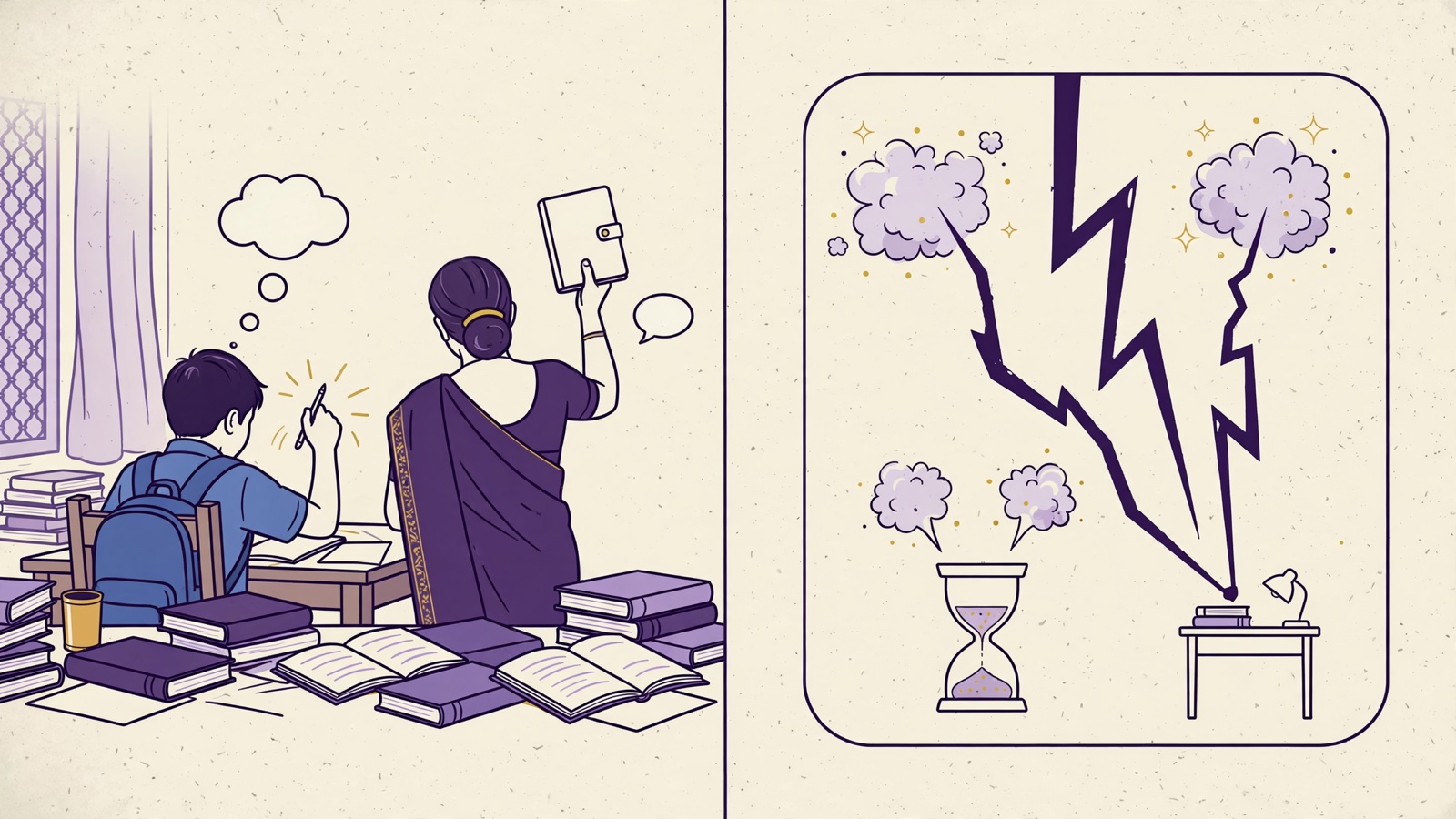
The Behavior Decoder
Translating what you see into what their nervous system is actually experiencing
"'I WAS doing it! Stop nagging me!' (Genuine fury, mid-slide into not doing it)"
In my head, I WAS doing it — for the last forty minutes, and thinking about doing it counts as doing it. Your interruption genuinely feels like an unfair accusation.
"'I forgot.' (Daily, for homework, permission slips, tuition bags)"
My working memory genuinely holds about three items under stress. 'Remember to remember' is not a capability I currently own.
"Two minutes into homework: sharpens a pencil, gets water, checks the phone, wanders back"
My brain under-stages dopamine for boring-but-vital tasks. The phone isn't indiscipline — it's a fuel hunt. Given a boring task and a bright screen, the screen wins by chemistry, not choice.
Executive Function Lag: The Brain's Late-Driving Systems
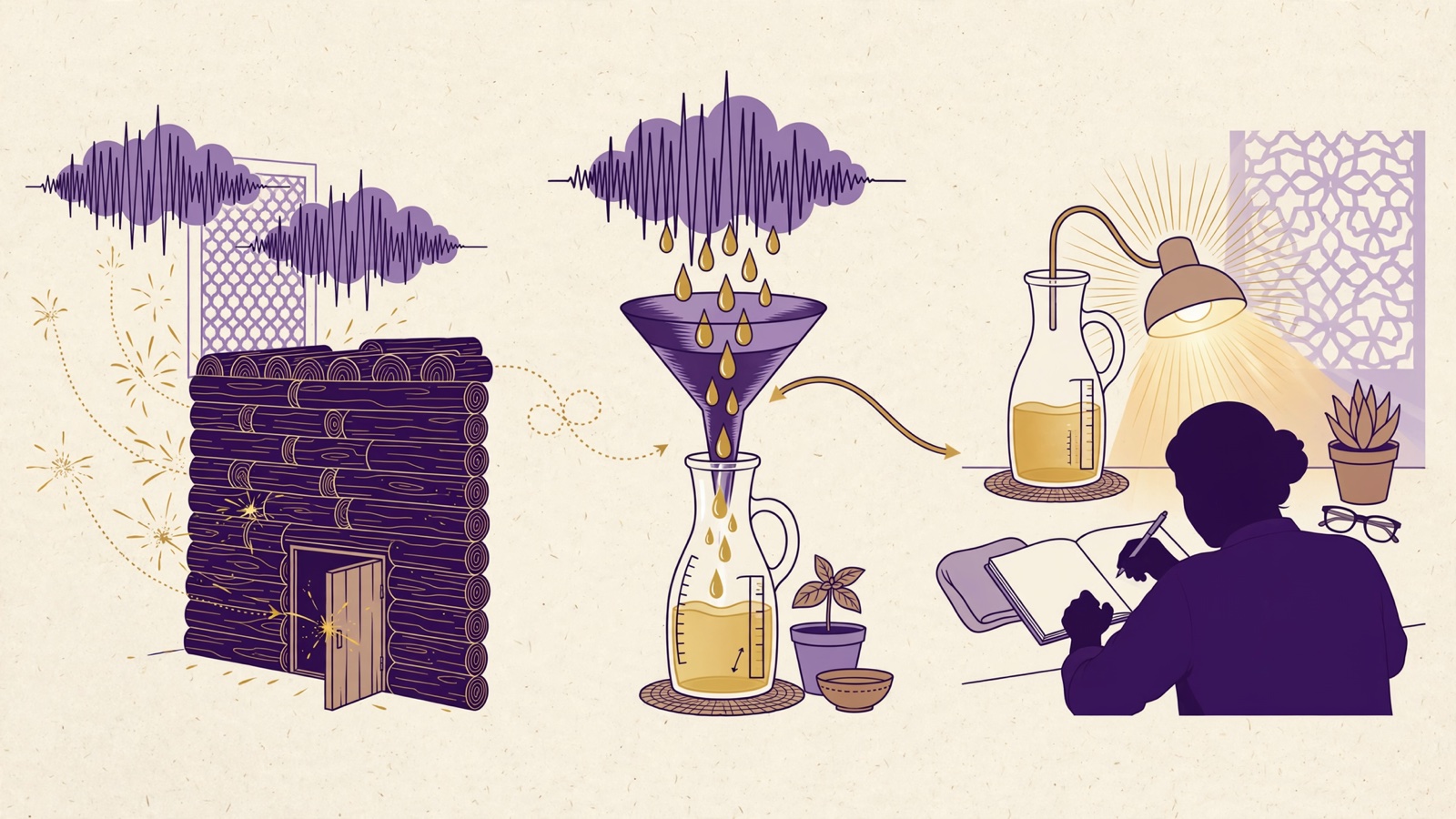
Executive function is the prefrontal toolkit — task initiation, working memory, inhibition, time perception, and switching. In ADHD-profile adolescents (diagnosed or not — a weak executive profile behaves identically day to day), this toolkit matures on a later biological schedule, often two to three years behind peers, while academic expectations keep aging on schedule. The result is the daily mismatch you live with: a teen who can hyperfocus three hours on a video game (novelty, instant reward) and stall 45 minutes over a maths worksheet (delayed reward). Bridges — visible checklists, timers, sprints, body-doubles — put the scaffolding outside the brain instead of demanding the brain self-supply.
Natural Instincts That Accidentally Make It Worse
Every caring parent falls into these traps out of love, fear, or exhaustion. Here is what happens inside their nervous system and how to shift:
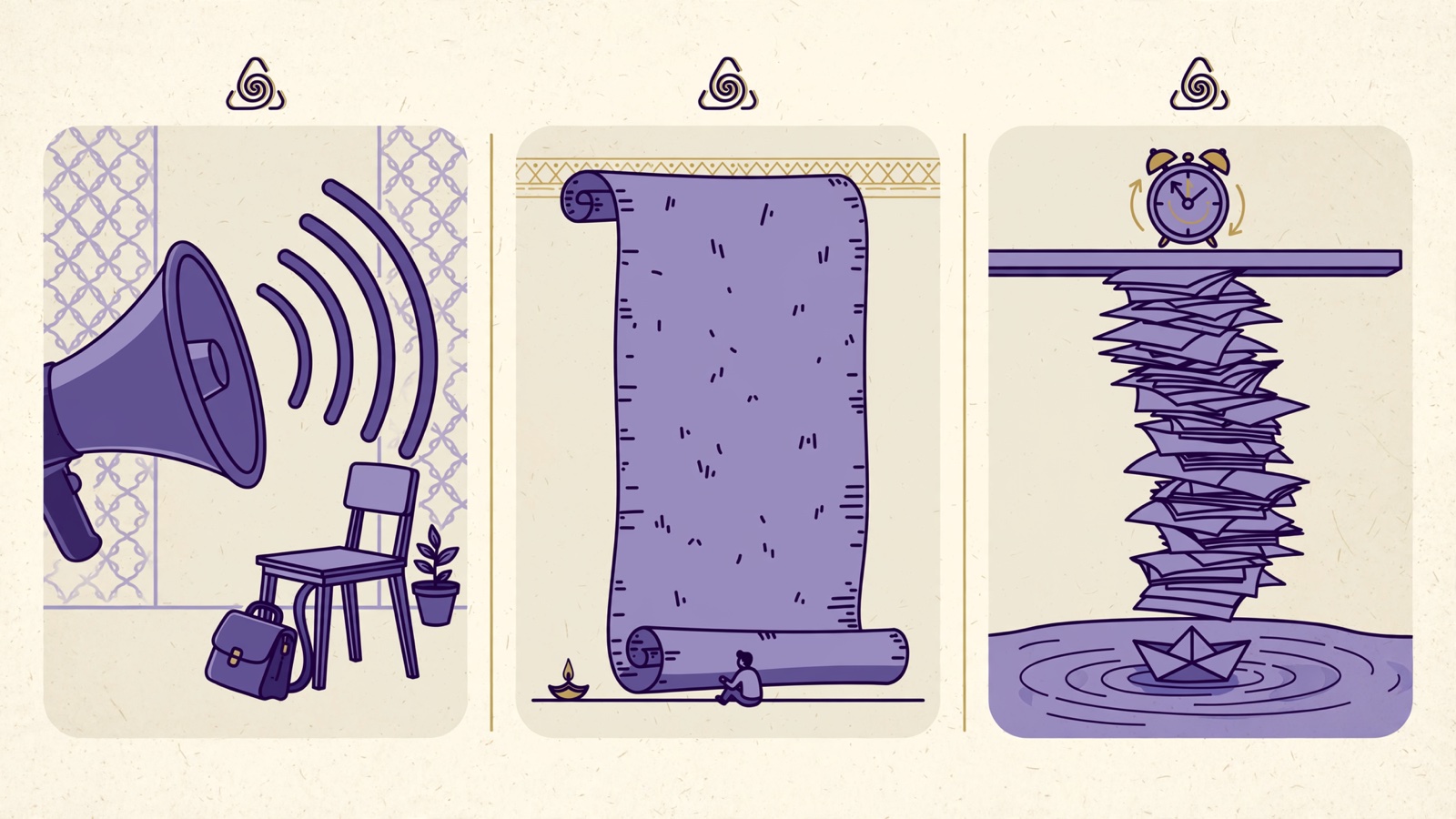
The Reminder Reflex (Ask Number 4,001)
'Homework? Bag packed? Tuition at six?' — repeated daily at rising volume.
Verbal reminders are invisible, late, and aversive. They train dependence (he waits for the prompt) and resentment in you. Nothing transfers to the actual goal — self-starting.
The one-prompt rule feeding a visual system: a single checklist card lives on the dining table, and the card does the prompting. You exit the reminder business.
The Character Verdict
'If you remembered your games like you remember homework, this house would run fine.'
Converts a developmental lag into a moral deficit. Adolescents internalise 'I am the problem', which fuels anxiety and shutdown rather than better systems.
System-verdict language instead: 'The task design failed the brain we have. We redesign the task, not the child.'
The Marathon Homework Block
'Sit down for two hours and finish everything — no breaks.'
Two unbroken hours is the single most impossible ask for an under-fuelled attention system. It guarantees wandering, phone discovery, and the 10:15 blow-up.
Sprints: 15 minutes on, 5 minutes moving, repeat. The sprint structure is not a reward — it's the fuel line.
The External Brain Protocol (Scaffolding Beats Willpower)
Four scaffolds that replace the nagging loop by moving structure outside his head and into the room.
The Visible Checklist (One Card, No Voice)
A single physical card beats 4,000 verbal reminders.
- One A5 card on the dining table: 'Today — Maths (1 worksheet), English (1 paragraph), Bag, Water.' Four lines maximum, in his own handwriting.
- He ticks items himself; the card, not you, is the prompter. You never say the homework word again — you say 'check the card'.
- Reset the card together after dinner (two minutes) so tomorrow starts pre-loaded.
The Launch Ritual (A 10-Minute On-Ramp)
Task initiation needs a runway, not a shove.
- Fixed launch pattern: same chair, same drink, one phone exchange ritual — the phone goes into a basket for sprint one and returns at break one.
- The first sprint target is deliberately tiny — one column of sums, one paragraph. Initiate first; expand afterwards.
- A visible timer lives on the table, not the phone. Sand timers work embarrassingly well.
The Sprint-and-Break Fuel System
Fuel the attention engine on schedule instead of demanding marathon discipline.
- 15 minutes work / 5 minutes of movement (stairs, stretching, water — never the phone) / repeat. After three sprints, a 10-minute phone break, earned.
- Sit in the same room for the first week — the body-double effect: your calm presence alone measurably improves follow-through. You read your own book; supervision is not the job, presence is.
- End each block at a planned stop, not a mid-disaster — 'unfinished but neatly parked' beats 'exhausted and ruined'.
The Landing System (Where Objects Actually Live)
Lost-item theatre dies when objects have one legal address.
- One launch pad near the door: the bag's only legal home, plus keys and permission slips. Nothing else ever lives there.
- Photograph the timetable and the day's homework at dinner — picture memory survives where to-do lists don't.
- Sunday reset, ten minutes, his job with music on: de-clutter the bag. Rummage-free weeks start here.
What to Say Tonight: Word-for-Word Scripts
Save these to your phone or keep them in mind for your next interaction.
"'Check the card. What's the first line?' That's the whole script."
Flat, near-neutral delivery, then walk away. No volume, no fourth repeat.
Transfers the prompt to the external system, denies the duel he's unknowingly inviting, and protects the relationship from reminder fatigue.
"'Okay — you were on it in your head, and in your head that counts. Let's make the outside match the inside: card line one, fifteen-minute timer, then a break. I'll trust the timer, not my eyes.'"
De-escalating, slightly wry, zero gotcha energy.
Concedes his experience (dignity), then pivots instantly to the scaffold instead of the argument.
"'The game pays you instantly every five seconds, and the worksheet never does — your brain isn't broken, it's just honest about payment schedules. That's why we run the timer and the card: we're building the payroll for boring work.'"
Calm, plain, said once — not stretched into a TED talk.
Explains the dopamine economics without excusing outcomes, and justifies the scaffold so scaffolding doesn't feel like a punishment.
Don't install reminders. Install ramps.
Flat, near-neutral delivery, then walk away
"Check the card. First line. Fifteen-minute timer. I'm not saying the homework word again."
The Underlying Psychological Mechanics
Why Willpower Rhetoric Always Loses to the Screen
Two consequences for parents:
You cannot reward your way out with words. 'Concentrate harder' is not a payment schedule, so the brain doesn't honour it.
You can change the payment schedule — that is exactly what the Sprint-and-Break system does: it converts delayed-reward drudgery into short, surmountable, immediately-timed blocks.
The Body-Double Effect
Diagnosis, Sometimes — Support Always
All Situations in Board Exams, Academic Pressure & ADHD
The Perfectionist Spiral (Crying Over 93%)
Terrified of making any mistake, chronic self-criticism, and tying their entire self-worth to report cards.
The Exam Panic & Physical Nausea Spiral
Physical sickness on test mornings, spiraling future dread, and test-taking paralysis.
Failing Grades & Academic Surrender
When marks drop, confidence collapses into 'I don't care anyway', and they give up on studying.
ADHD, Executive Lag & The Scattered Backpack
Lost books, chronic dopamine hunting, and why conventional nagging about homework never works.
Sensory Overwhelm & Social Masking Burnout
Exhaustion after school, sensory meltdowns at home, and navigating high-pressure environments.
Board Exam Season Survival (Class 10 & 12)
Three months of mock-test weather: how to be the calm parent the exam hall never provides.
Don't Try to Fix Everything Tonight. Just Start Here.
Parenting shifts happen in tiny, consistent micro-moments. Choose the resource that fits your immediate need:
ADHD Focus Plan: Sprint and Checklist System (Printable)
A 1-page sprint-timer map, launch-ritual cards, and the visible checklist template to externalise the executive lag.
Check Your Teen's Hidden Need Profile
Answer 6 quick questions to discover the exact root driver behind your teen's specific behavior patterns.
Study Without Struggle
Work 1-on-1 to reset your home environment, resolve chronic conflicts, and build lasting connection.
Cross-Chapter Recommended Guides
The Unmotivated Son: Why Teenage Boys Freeze Under Academic Pressure & Retreat into Gaming
When teenage boys face mounting board exam pressure and future uncertainty, they don't ask for help—they freeze, feign apathy, and play video games for 8 hours. Understand the Future Dread driver and how to rebuild his agency.
The Surrendered Student: When Failing Grades Turn Into 'I Don't Care Anyway'
'I don't care anyway' is almost never the truth — it is armour against a grade line they believe is unwinnable. Learn to drop the fight over effort and rebuild competence one reachable rung at a time.